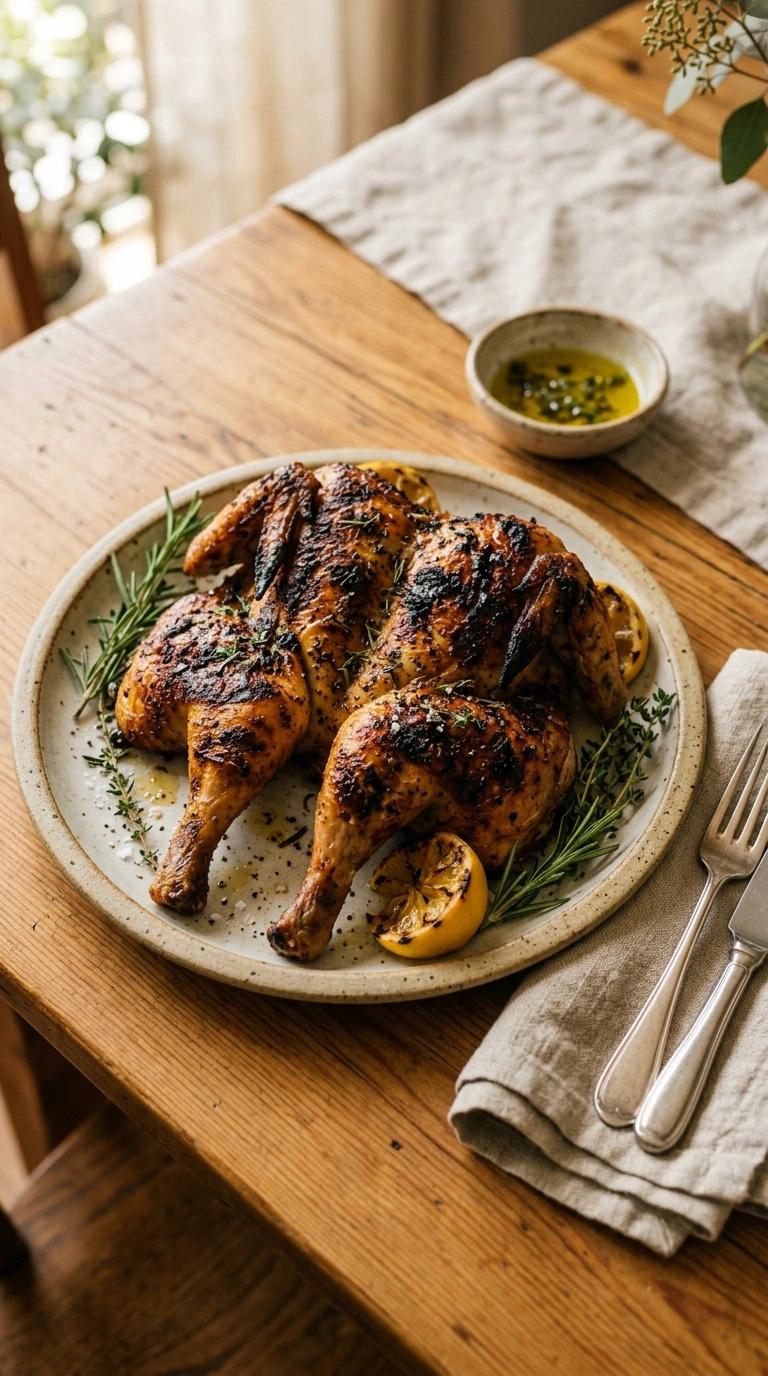
Most home cooks don’t flip their lemon herb roasted chicken recipe halfway through cooking—and that’s exactly why their results fall flat and uneven. The skin won’t crisp properly on one side if you leave it untouched for the full 90 minutes. One simple flip at the midpoint changes everything, giving you that golden, crackling exterior that shatters when you cut into it.
The smell alone will draw everyone into your kitchen before dinner’s even close to done. That warm, buttery aroma with hints of lemon and herbs hits different on a lazy Sunday afternoon. Honestly, it’s one of those recipes that makes your whole house feel like a restaurant for the evening.
This isn’t complicated cooking—it’s actually one of the easiest ways to feed a crowd without stressing. You’ll have a juicy, tender bird with minimal effort, and leftovers that work for three more meals. If you’re planning your week and need something reliable, bookmark this for meal prep day.
Want to level up your roasted chicken game? I’ve also got garlic butter roasted chicken and a bunch of other comfort roasts that follow the same technique.
Why most whole roasted chicken recipes disappoint
Most people rush their prep work or skip seasoning inside the cavity—that’s where the flavor magic happens. You’re not just seasoning the outside; you’re creating a steam chamber of herbs that infuses every bite from the inside out. The difference between a bland bird and one that tastes like you spent hours on it comes down to technique, not ingredients.
Here’s what changes when you nail the method:
- Crispy, shattered skin happens only when you start at high heat (450°F) then drop to 375°F—the two-temperature approach locks moisture in while crisping the exterior
- Herbs release their oils faster when the bird hits warmth gradually, building flavor depth instead of burning off
- The flip at 45 minutes prevents the breast from drying out while thighs finish cooking through
- Resting for 10 minutes after roasting lets juices redistribute, so every slice stays tender and moist
Your lemon herb roasted chicken won’t taste restaurant-quality if you skip the flip or rush the resting period. Both steps matter equally.
Ingredients for lemon herb roasted chicken recipe
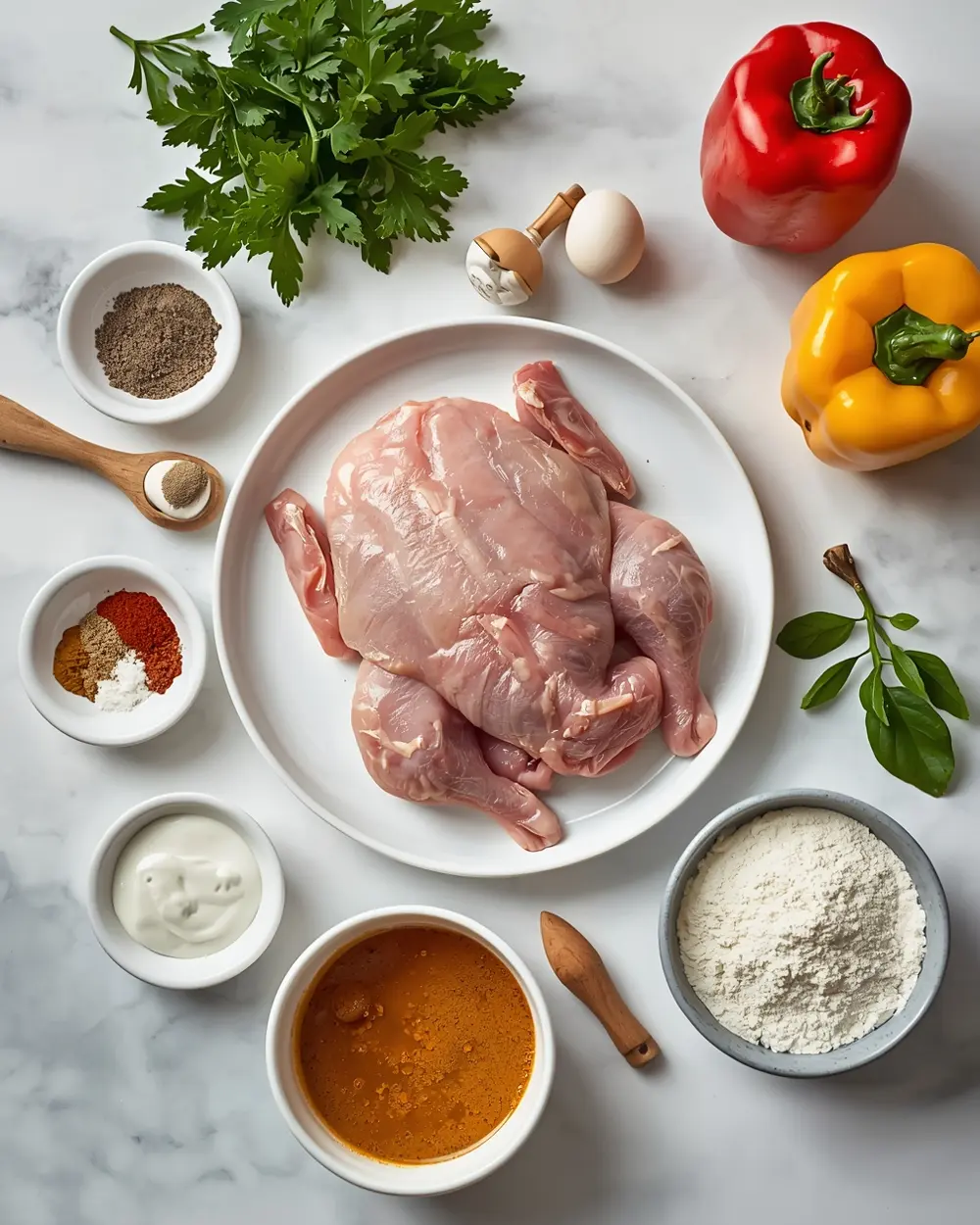
- 1 whole chicken, about 4 pounds
- 2 lemons (zest and slices)
- 3 tablespoons olive oil
- 2 tablespoons butter
- 4 cloves garlic, minced
- 1 teaspoon salt
- 1/2 teaspoon black pepper
- 1 teaspoon dried rosemary
- 1 teaspoon dried thyme
- 1 medium onion, quartered
- 1 tablespoon fresh parsley, chopped
The chicken skin should feel dry to the touch before seasoning—pat it down with paper towels if it’s damp. That texture difference is what gives you crispy skin instead of steamed skin. A damp bird will never get golden, no matter how hot your oven goes.
You can swap dried herbs for fresh if that’s what you’ve got on hand. Use triple the amount of fresh herbs since they’re milder than dried. Some people add fresh sage or thyme sprigs inside the cavity, but I stick with what’s here because it works every single time. Trust me on skipping the extra steps—lemon herb roasted chicken recipe doesn’t need to be complicated to taste incredible.
Step-by-step instructions
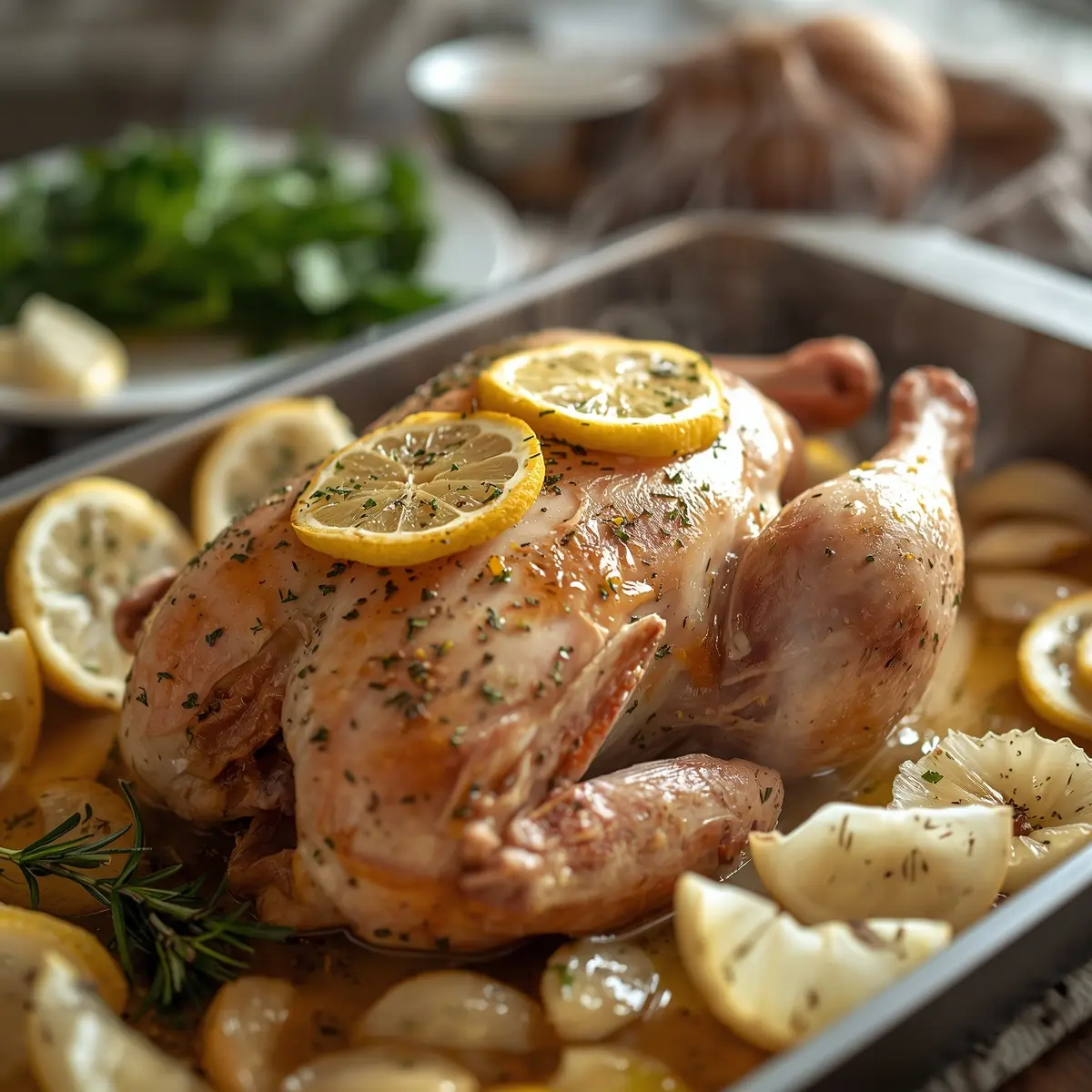
1. Preheat your oven to 450°F. Pat the chicken completely dry with paper towels inside and out—this step’s non-negotiable for crispy skin. Place it breast-side up in a roasting pan and let it sit at room temperature for 15 minutes while the oven heats.
2. Mix the minced garlic, zest from both lemons, rosemary, thyme, salt, and pepper in a small bowl. Rub this mixture all over the chicken’s exterior, getting under the skin on the breasts if you can. Stuff the cavity with lemon slices, onion quarters, and fresh parsley.
3. Drizzle olive oil over the chicken and dot with butter. You’ll hear it sizzle the moment it hits the hot pan—that’s your signal the oven’s ready. Roast at 450°F for 15 minutes to sear the skin and lock in moisture.
4. After 15 minutes, drop the oven temperature to 375°F and continue roasting for 45 minutes. This is where the real cooking happens. The lower heat prevents the skin from burning while the meat cooks through evenly.
5. At the 45-minute mark, carefully flip the chicken so the breast faces down. This flip prevents the breast meat from drying out while the thighs finish cooking. Roast for another 30 minutes until the thighs reach an internal temperature of 165°F at the thickest part.
6. When your kitchen smells like warm butter, caramelized lemon, and toasted herbs—that’s your signal it’s almost done. Check the internal temperature with a meat thermometer in the thigh without touching bone. The skin should be deep golden and crispy all over.
7. Remove from the oven and let the chicken rest for 10 minutes before carving. Don’t skip this step—it lets the juices redistribute throughout the meat. I always tent it loosely with foil to keep it warm while resting.
Mine always sticks a little to the pan at the bottom, and that’s completely fine—those browned bits add flavor to your pan sauce if you want to make one.
Serving ideas for lemon herb roasted chicken recipe
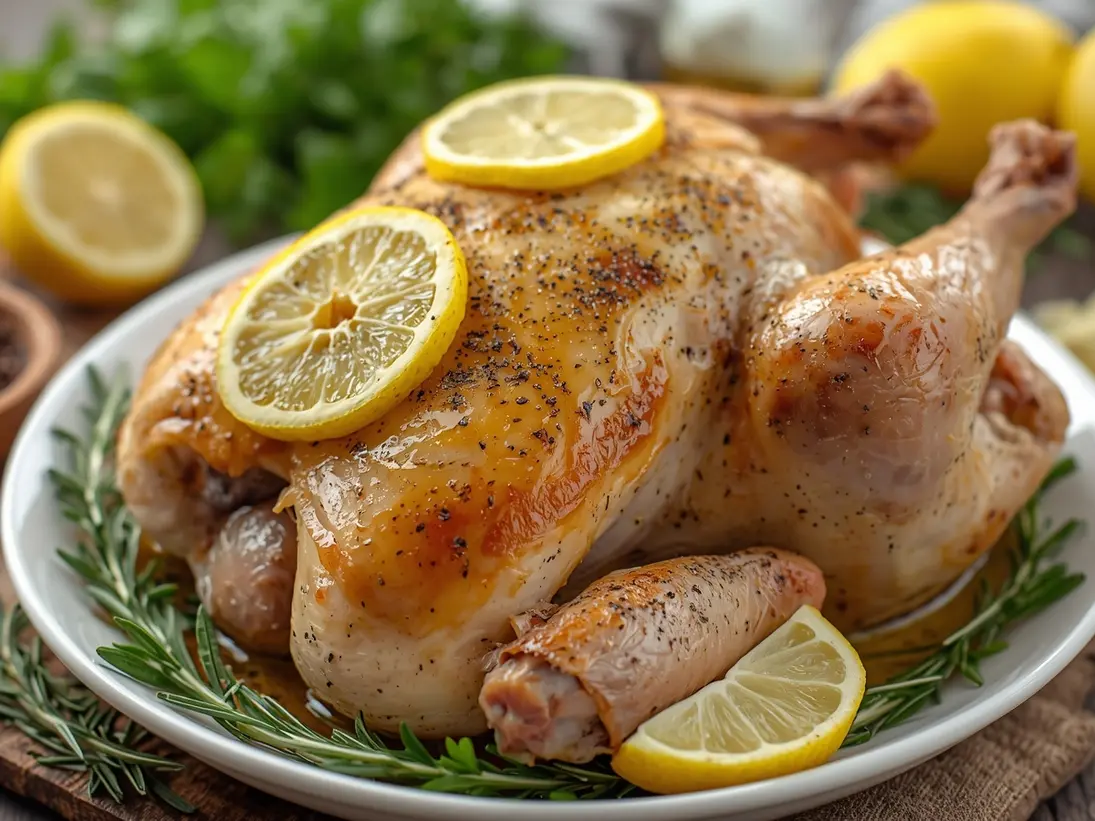
Pair this with sides that let the herb flavors shine through without competing.
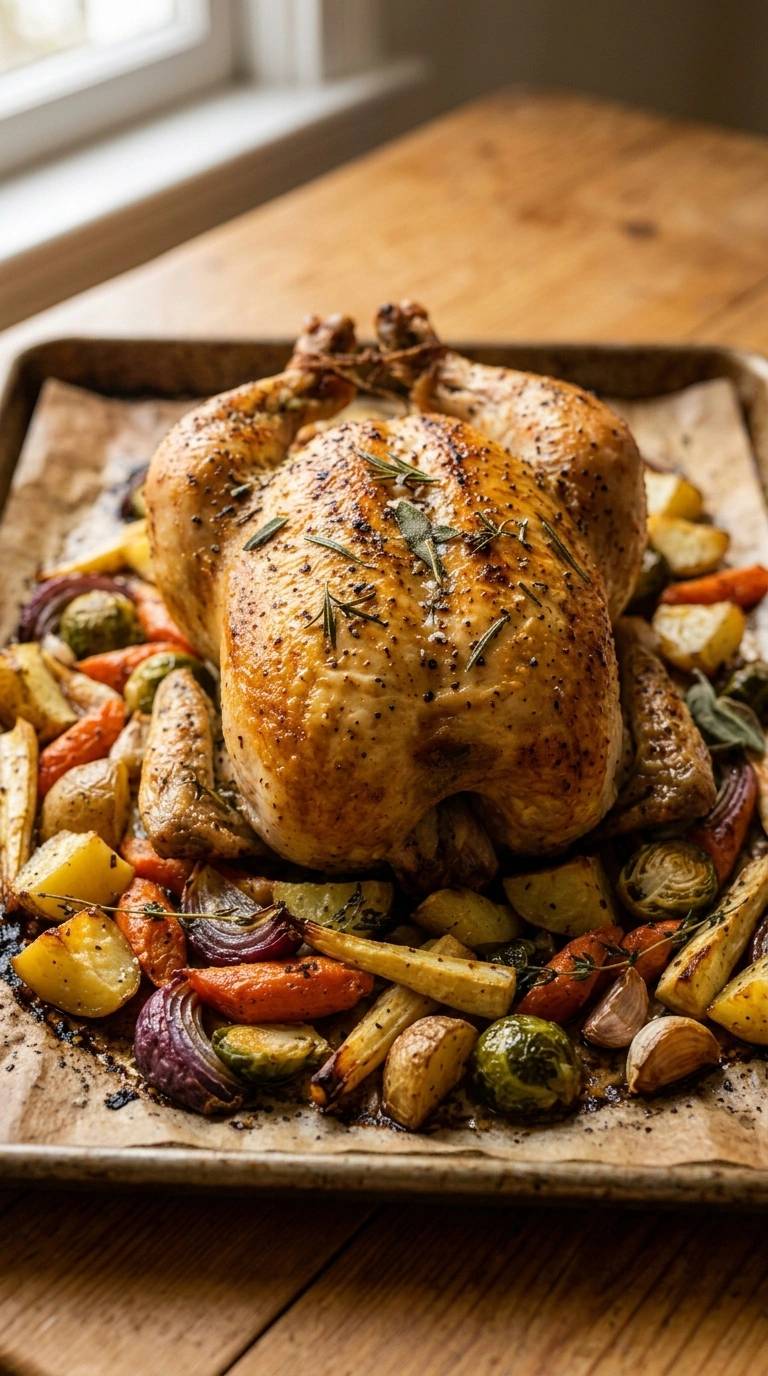
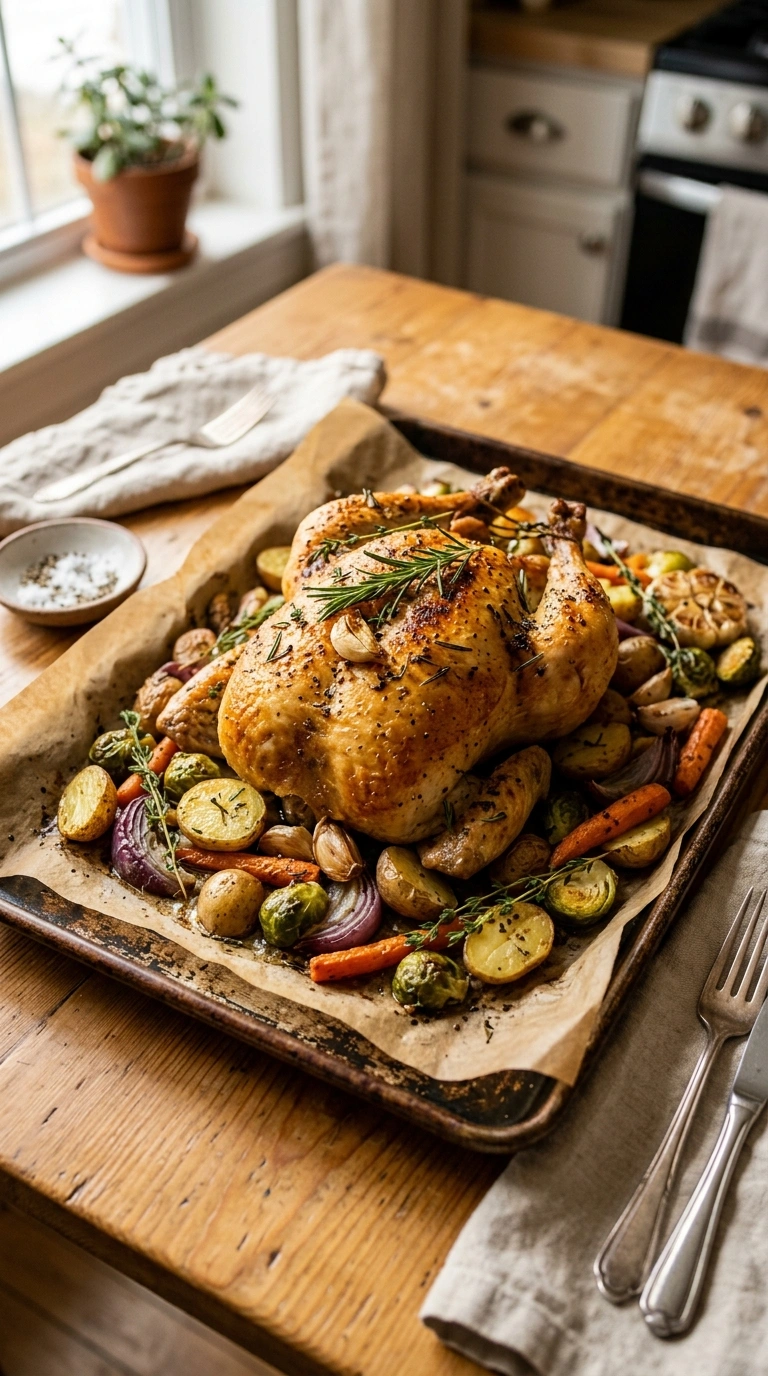
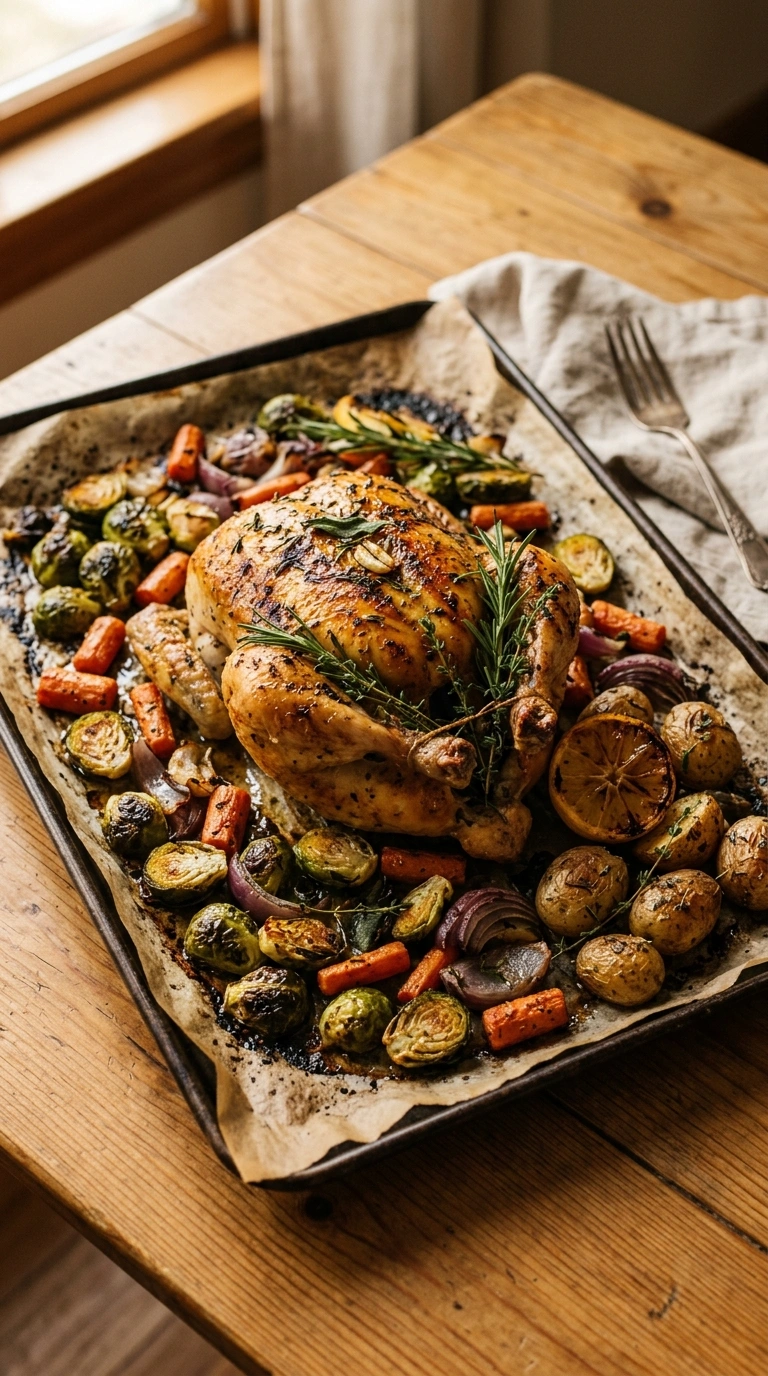
Roasted root vegetables with crispy edges
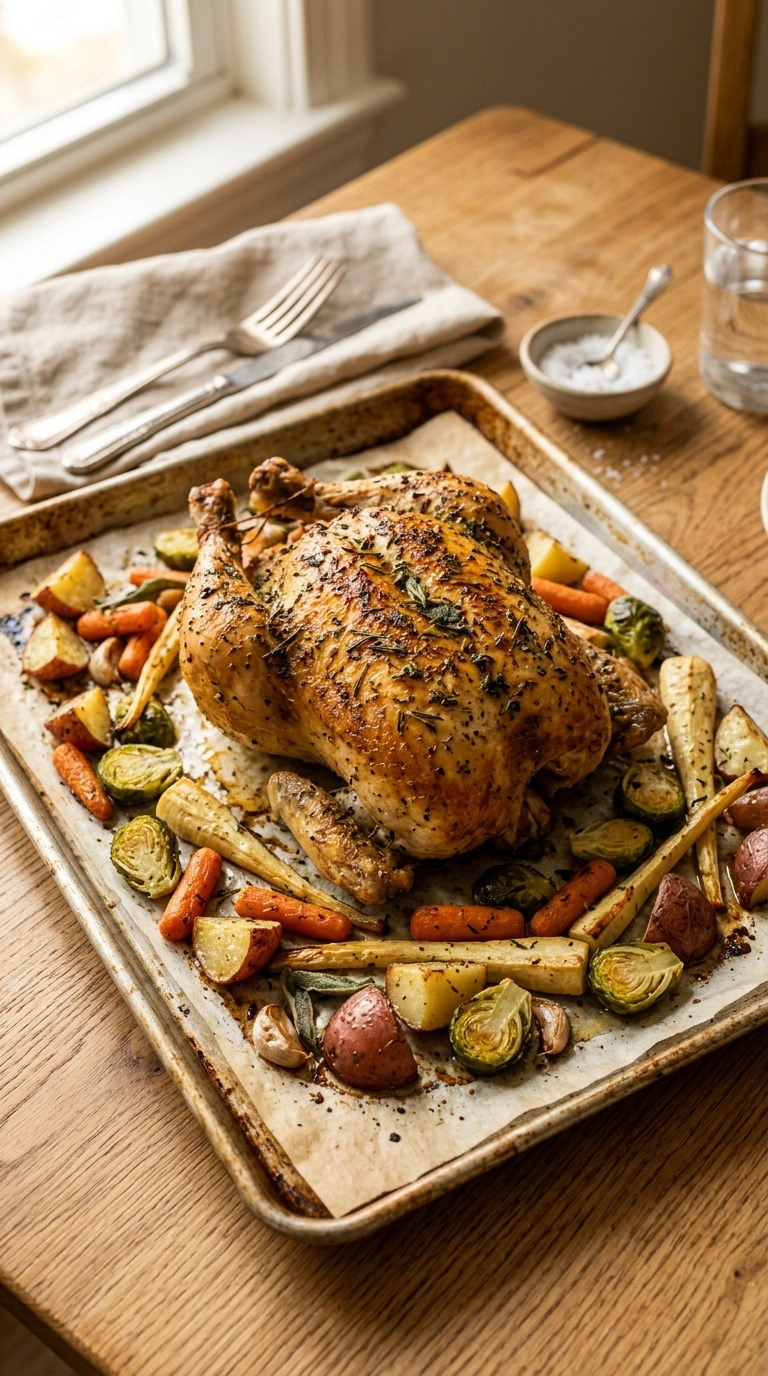
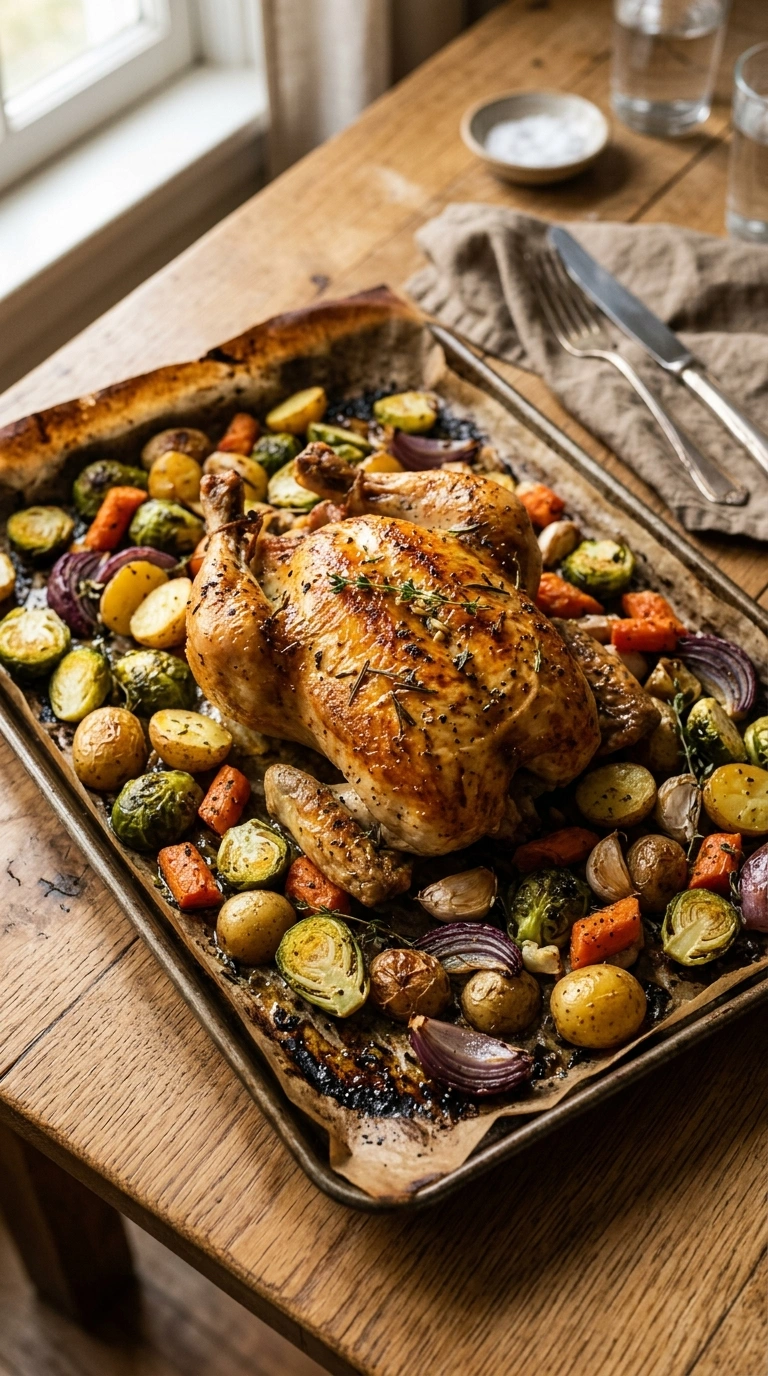
Toss baby potatoes, carrots, and parsnips in olive oil and roast them alongside your chicken in the last 45 minutes. The crispy, caramelized edges contrast beautifully against the tender, juicy chicken meat—that temperature and texture combo is what makes the plate work. Serve them together on one platter for a restaurant-style presentation.
Creamy garlic mashed potatoes
Smooth, buttery mashed potatoes soak up all the pan drippings and complement the herb flavors perfectly. The cool, velvety texture against the hot, crispy chicken skin is exactly what makes this pairing classic for a reason. You can also check out garlic herb butter chicken for another flavor variation on the same technique.
Fresh arugula salad with lemon vinaigrette
The bright, peppery greens cut through the richness of the roasted bird with sharp, tangy dressing. A cold salad alongside hot chicken gives you that contrast that keeps you coming back for bite after bite. Toss in some shaved Parmesan and toasted nuts for texture.
Frequently asked questions
Can I freeze lemon herb roasted chicken recipe leftovers?
Yes, freeze carved meat or the whole chicken in airtight containers for up to 3 months. Wrap pieces tightly to prevent freezer burn, and label with the date. Thaw overnight in the fridge before reheating at 325°F until warmed through.
What herbs can I substitute in this lemon herb roasted chicken recipe?
You can swap rosemary and thyme for tarragon, oregano, or marjoram—use the same amounts. Fresh herbs work too, just use triple the quantity since they’re milder. Sage pairs beautifully with lemon if you want to try something different.
How do I reheat leftover roasted chicken without drying it out?
Reheat at 325°F for 15-20 minutes covered with foil until the meat reaches 165°F internally. Low, slow heat keeps the meat tender instead of tough. You can also shred it and warm it in chicken broth for extra moisture.
Why is resting the chicken after roasting so important?
Resting for 10 minutes lets the juices redistribute throughout the meat instead of running out onto your cutting board. Skip this step and you’ll lose half your juices—that’s the difference between tender and dry. Tent it loosely with foil to keep it warm while resting.
Final thoughts
You now know what most home cooks miss about lemon herb roasted chicken recipe: the technique matters way more than fancy ingredients. The two-temperature roast, the midpoint flip, and the 10-minute rest are your secret weapons for restaurant-quality results every single time.
The first bite is where it all comes together—that shattering, golden skin gives way to juicy, herb-infused meat that tastes like you spent all day cooking. One bite and people ask if you learned this at culinary school. That’s the power of nailing the fundamentals.
This is your go-to recipe for busy weeknights when you want something that looks impressive but doesn’t stress you out. You can also explore herb roasted chicken variations once you’ve mastered the classic version.
The crispy skin and tender meat combo is what keeps families coming back to this recipe week after week. Pin this for your next Sunday dinner and watch everyone ask for seconds.
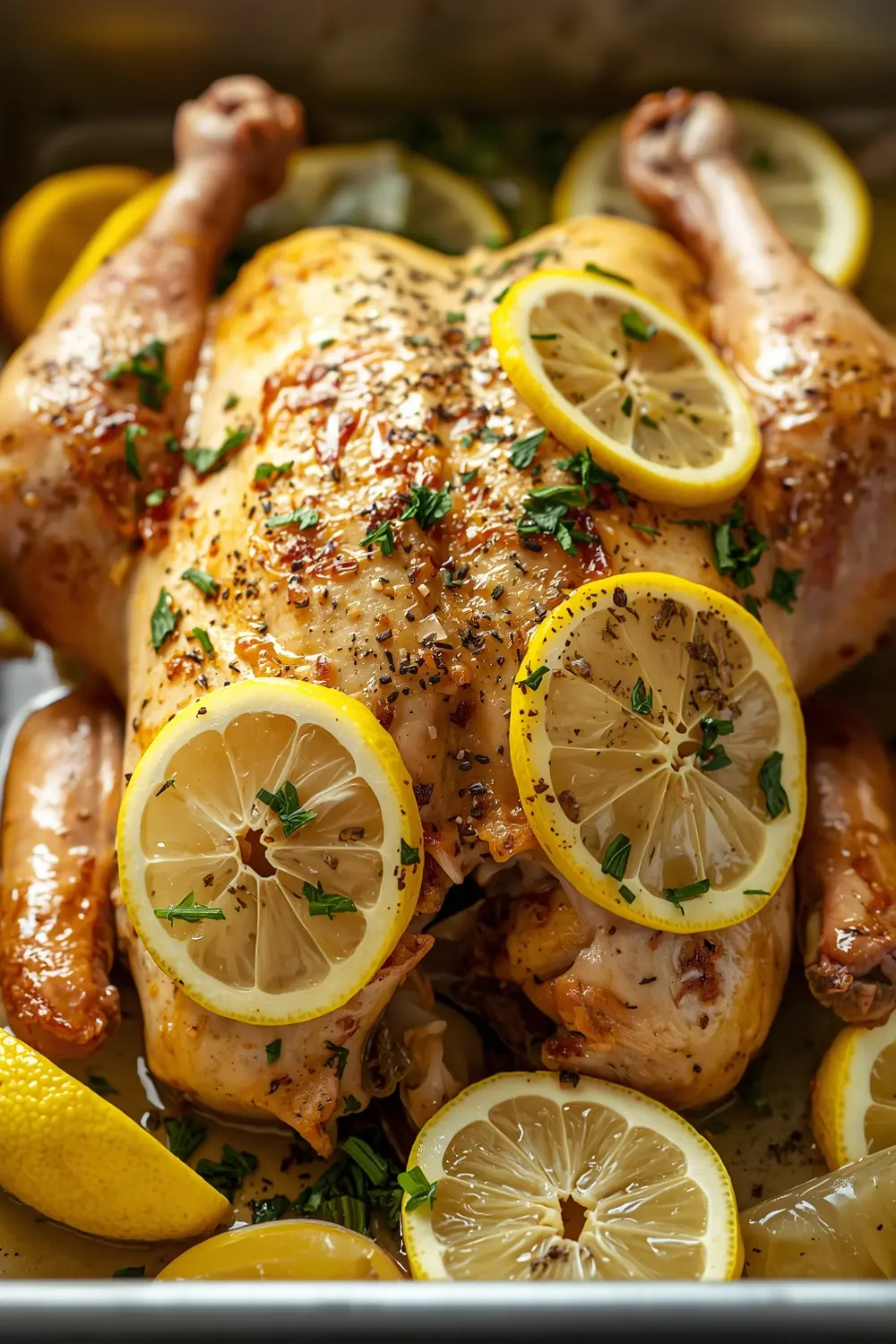
Lemon Herb Roasted Chicken – Easy Sunday Comfort Dinner Recipe
Ingredients
Method
- Preheat your oven to 450°F. Pat the chicken completely dry with paper towels inside and out—this step’s non-negotiable for crispy skin. Place it breast-side up in a roasting pan and let it sit at room temperature for 15 minutes while the oven heats.
- Mix the minced garlic, zest from both lemons, rosemary, thyme, salt, and pepper in a small bowl. Rub this mixture all over the chicken’s exterior, getting under the skin on the breasts if you can. Stuff the cavity with lemon slices, onion quarters, and fresh parsley.
- Drizzle olive oil over the chicken and dot with butter. You’ll hear it sizzle the moment it hits the hot pan—that’s your signal the oven’s ready. Roast at 450°F for 15 minutes to sear the skin and lock in moisture.
- After 15 minutes, drop the oven temperature to 375°F and continue roasting for 45 minutes. This is where the real cooking happens. The lower heat prevents the skin from burning while the meat cooks through evenly.
- At the 45-minute mark, carefully flip the chicken so the breast faces down. This flip prevents the breast meat from drying out while the thighs finish cooking. Roast for another 30 minutes until the thighs reach an internal temperature of 165°F at the thickest part.
- When your kitchen smells like warm butter, caramelized lemon, and toasted herbs—that’s your signal it’s almost done. Check the internal temperature with a meat thermometer in the thigh without touching bone. The skin should be deep golden and crispy all over.
- Remove from the oven and let the chicken rest for 10 minutes before carving. Don’t skip this step—it lets the juices redistribute throughout the meat. I always tent it loosely with foil to keep it warm while resting.