Pat your chicken breasts dry with paper towels. Place them between two pieces of plastic wrap and pound them to about a quarter-inch thickness using a meat mallet. Don't go crazy — you want them thin but still in one piece. This step is crucial because it ensures even cooking and tenderizes the meat naturally.
Mix your flour, salt, and black pepper together in a shallow bowl. Working with one chicken breast at a time, dredge it in the flour mixture, coating both sides completely. Shake off any excess flour so the coating isn't too thick. Set the floured chicken on a clean plate and repeat with the remaining breasts.
Heat your olive oil in a large skillet over medium-high heat until it shimmers. Carefully place the first chicken breast in the pan — you'll hear it sizzle immediately, which tells you the temperature is perfect. Let it cook without moving it for about 3 to 4 minutes until the bottom is golden and crispy.
Flip the chicken carefully and cook the other side for another 3 to 4 minutes until it's golden brown all over. Don't keep poking at it or you'll mess up the crust. Work in batches if your pan isn't huge — you want space around each piece so it actually sears instead of steams.
Remove the cooked chicken to a clean plate and set it aside. Add the butter to the same pan with all those golden bits stuck to the bottom. Pour in your chicken broth and fresh lemon juice, scraping up those bits as you go. This is called deglazing and it's where all the flavor lives.
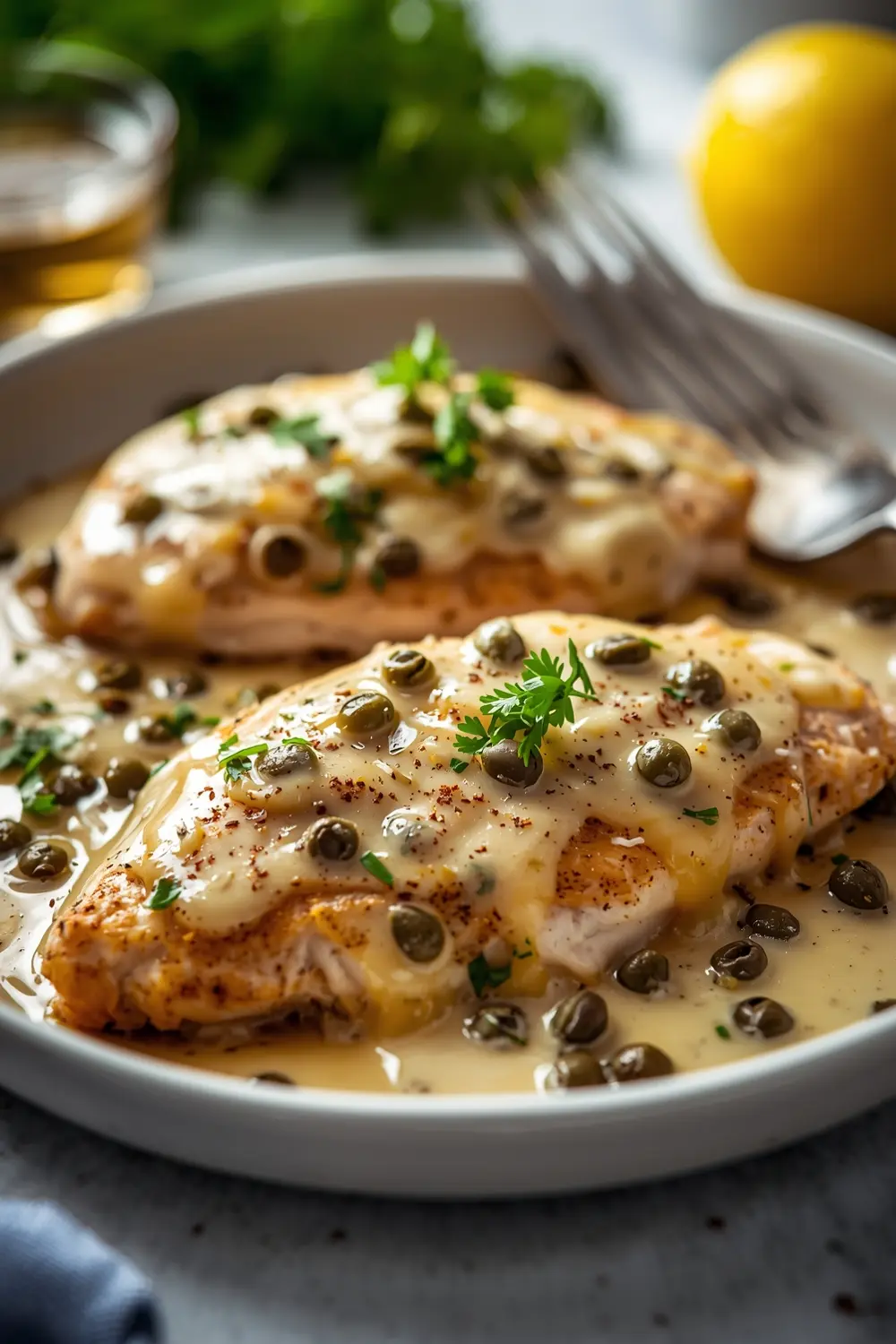
Let the sauce bubble and reduce for about 2 to 3 minutes. When your kitchen smells intensely lemony and warm, almost caramelized with a hint of butter, that's when you know it's ready. Stir in the capers and return the chicken to the pan, nestling it into the sauce.
Cook everything together for just 1 more minute so the chicken gets coated in that gorgeous sauce. Sprinkle fresh parsley on top right before serving. The whole thing took you maybe 25 minutes, and honestly, it tastes like you spent way longer on it than you actually did.