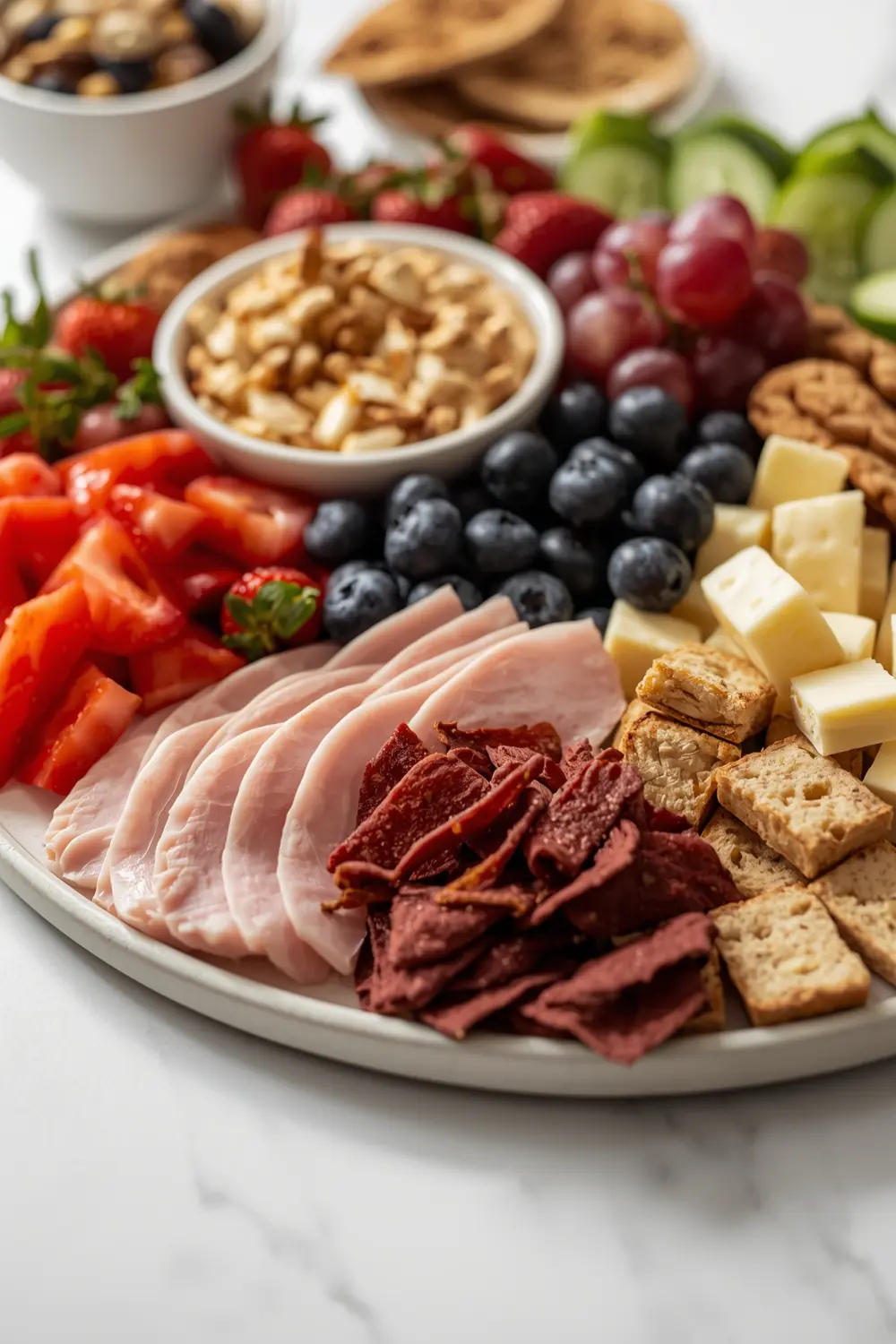
Start by laying out your board or platter on a completely flat, stable surface where it won't shift. I always do this step indoors first before moving it outside—saves the panic of cheese rolling everywhere. A 16-18 inch wooden board or marble slab works best because it won't tip when guests lean in.
Anchor the board with your two spreads: place hummus on one side and olive tapenade on the other, leaving about 3-4 inches between them. These act as flavor anchors, so positioning matters. I learned this the hard way after Jake accidentally grabbed half the hummus with one pita round—spreading it thin prevents that chaos.
Arrange your proteins next: fan the turkey slices in a loose arc, then cluster the beef jerky strips nearby so they stay visible and accessible. The chicken salad should go in its own small dish or mound to prevent it from drying out. Why? Proteins dry faster than anything else when exposed to air and sun.
Fill the remaining gaps with cheddar cheese cubes first—they act as visual anchors that help define sections of the board. Scatter them unevenly rather than in neat rows. This feels more intentional and makes the 4th of july charcuterie board cozy look abundant rather than sparse.
Layer fresh fruits strategically: strawberries in one area, blueberries clustered together for color impact, grapes filling smaller gaps, and cucumber slices standing vertically for height variation. Keeping fruits separated prevents their juices from mingling and making the board look wilted.
Distribute nuts across the board, filling final gaps and adding textural contrast that prevents monotony. Almonds and pistachios create visual interest without overwhelming the palette. I place them in small clusters rather than scattered, which makes them easier for guests to grab without accidentally touching multiple things.
Arrange mini pita rounds standing up or slightly fanned around the spreads—they're both edible and structural. Cherry tomatoes and any remaining cucumber slices fill final gaps. Step back and check for color balance: you want red, white, and blue elements visible from above.