Line a 9x13 baking sheet with parchment paper, pressing it into corners so it stays flat. I run my fingers around the edges first to catch it before chocolate seeps underneath—rookie mistake I made once and cleaned chocolate off my oven floor for an hour. This step takes thirty seconds and saves twenty minutes of regret.
Chop your dark chocolate into pieces smaller than a dime, then place in a microwave-safe bowl. Heat in 30-second bursts, stirring between each one, until melted but still thick enough to pour slowly. Why the bursts? Because chocolate seizes if overheated—the cocoa solids seize up and the whole batch becomes grainy. I learned this when I got impatient and nuked it for two full minutes. The texture breaks, and you're starting over.
Spread the melted dark chocolate across your parchment-lined sheet in an even layer, about quarter-inch thick. Use an offset spatula or the back of a spoon, working quickly but gently so you don't tear the parchment. Let it cool at room temperature for exactly 10 minutes—you want it set enough that toppings won't sink, but still warm enough for white chocolate to stick.
Chop the white chocolate the same size as the dark chocolate, then melt using the same 30-second burst method. Pour it into a small zip-top bag and snip one corner to create a piping tool. Drizzle white chocolate back and forth across the dark chocolate layer in thin, deliberate lines. This creates visual drama plus flavor variation—each bite hits both chocolates instead of getting just dark or just white chocolate chunks.
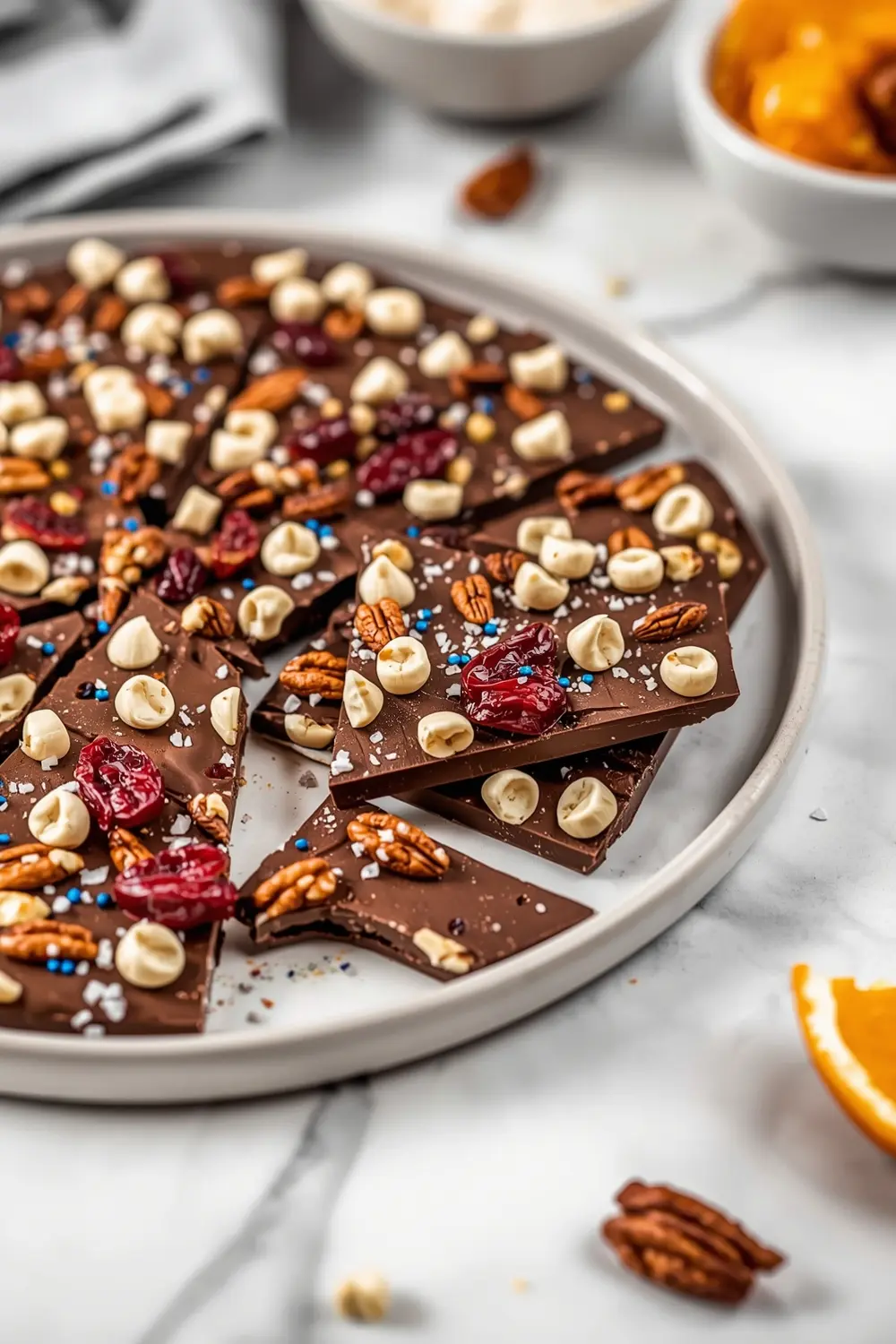
While the white chocolate is still wet and glossy, scatter your toppings across the entire surface in clusters rather than spreading evenly. Cranberries in one corner, pistachios in another, coconut flakes across the middle, pecans near the bottom. Leave small dark chocolate gaps visible—this isn't a topping avalanche. The sea salt flakes go last, sprinkled over everything, because they need to sit on top to actually register on your tongue.
Place the entire sheet in the freezer for exactly 50 minutes. Don't skip this or rush it by using the fridge. Fifty minutes in the freezer ensures the chocolate hardens completely so when you break it into pieces, you get clean snaps instead of chocolate bending and tearing. Jake once asked why we couldn't just wait five minutes on the counter, and the answer is texture—the slow freeze in a cold environment creates a snap that room-temperature setting never does.
Remove from the freezer and let sit at room temperature for 3 minutes before breaking into pieces with your hands. The slight warmup prevents the chocolate from shattering into dust. Break the 4th of july chocolate bark cozy recipe into irregular shards about 2 inches wide—rustic, not perfect, because perfect looks manufactured and cozy doesn't.