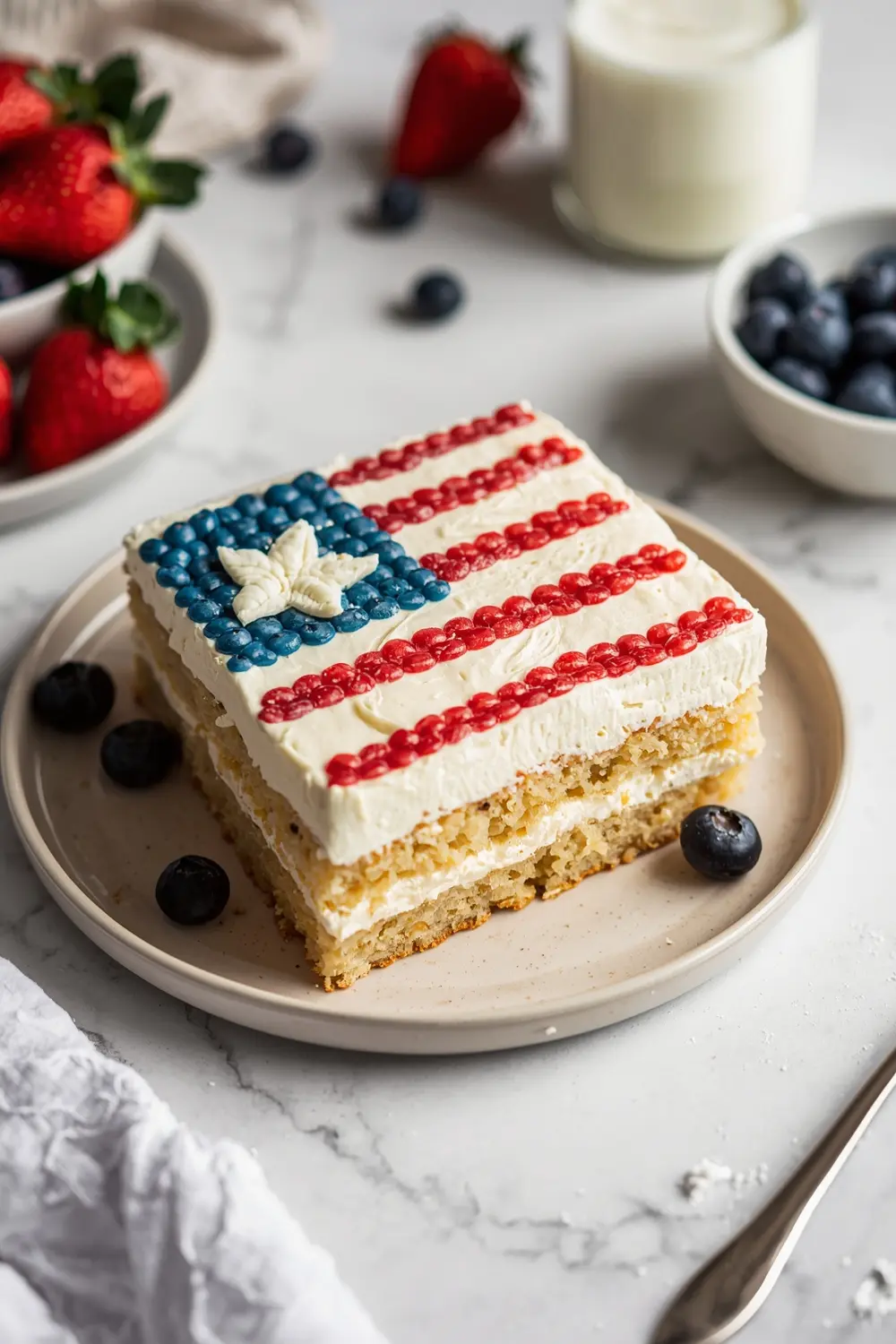
Preheat your oven to 350°F and line a 9-inch round cake pan with parchment. Whisk together the flour, baking powder, and salt in a medium bowl—this aerates the flour so your cake rises evenly rather than doming in the center. I always do this by hand because it takes 30 seconds and I can feel when the mixture turns uniform, which you can't sense with an electric mixer.
Cream the butter and sugar together for 3 minutes until the mixture looks pale and fluffy, like wet sand. This is where most home bakers stop too early—keep going until you see ribbons form when you lift the mixer. The reason this matters: air pockets expand in the oven and create a tender crumb instead of a dense, gummy cake that feels like you're eating pound cake.
Add eggs one at a time, mixing for 45 seconds after each addition. Alternate between adding the flour mixture and milk in three additions, starting and ending with flour—never add milk to dry flour or you'll get lumps that refuse to dissolve. I learned this the hard way the first time I made this cozy patriotic cake, and spent ten minutes whipping out streaks from the batter.
Pour the batter into your prepared pan and bake for 45-50 minutes until a toothpick inserted in the center emerges with just a few moist crumbs clinging to it. The cake should pull slightly from the edges but still feel soft when you tap the top. Let it cool in the pan for 15 minutes, then turn it out onto a wire rack to cool completely—this prevents condensation from making the top soggy.
While the cake cools, prepare the frosting by beating the room-temperature cream cheese and butter together for 2 minutes until completely combined. Add the powdered sugar gradually, then the heavy cream, beating until stiff peaks form—this takes 4-5 minutes total. The reason we whip it this long is to incorporate air, which keeps the frosting light enough to pipe clean flag stripes instead of looking like you spread it on with a knife.
Divide the frosting into three bowls: leave one plain white, add the red food coloring and strawberry puree to the second, and the blue coloring and blueberry puree to the third. Mix each until the color is even and the 4th of july flag cake cozy stripes will be photo-ready. I always taste a tiny bit to make sure the puree didn't make it too tart—if it did, add another teaspoon of powdered sugar to that batch.
Level off the top of your cooled cake if it domed, then frost the top with horizontal stripes: white, then red, then blue, dividing the surface into thirds. You can use an offset spatula or a piping bag fitted with a straight tip—I prefer the piping bag because it gives you cleaner edges and the frosting stays visible through serving without getting smeared. The white stripe represents the stars, though they're invisible on this design, which is totally fine because the real patriotic moment happens when someone bites through all three layers at once.