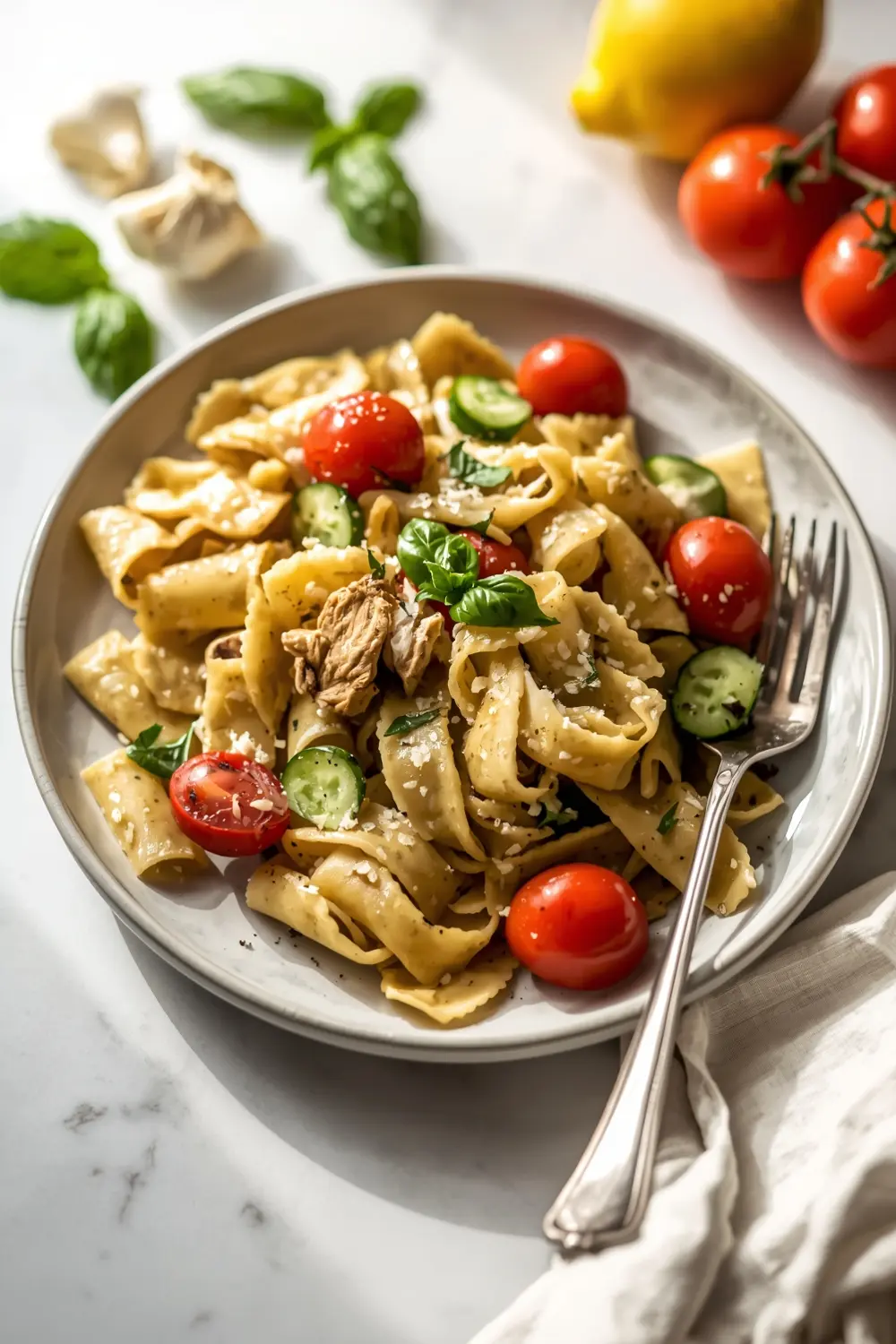
Bring a large pot of salted water to a rolling boil, then add your 200 g fusilli and cook for 12-15 minutes until al dente. I always pull out a single piece at the 12-minute mark and run it under cold water to bite-test it. You want that slight resistance between your teeth, not mush. This matters because overcooked pasta absorbs too much liquid and dilutes the pesto coating.
While pasta cooks, toast your pine nuts in a dry skillet over medium heat for 3-4 minutes, shaking the pan constantly. Listen for the moment they shift from pale to golden-brown—that's your cue to pull them off heat immediately. I learned this the hard way after burning an entire batch while distracted; those nuts go from perfect to charred in about 45 seconds flat.
In a food processor or mortar and pestle, combine your basil leaves, toasted pine nuts, 2 garlic cloves, and 1/3 cup grated Parmesan cheese. Pulse until the texture resembles wet sand—don't over-blend into a paste, because that breaks down the basil's cellular structure and makes it taste oxidized and bitter. This technique is why cozy cold pesto pasta summer recipe tastes fresher than versions that get over-processed.
With the processor still running, drizzle in your 1/4 cup extra-virgin olive oil slowly, then add 1 tbsp lemon juice and 1 tsp sea salt. Pulse until combined but still slightly chunky—this takes about 30 seconds total. The oil emulsifies slightly with the acid, which creates that silky coating effect when it hits the warm pasta.
Drain your pasta in a colander, then spread it on a large plate or shallow bowl to cool for about 5 minutes at room temperature. Don't refrigerate it yet; you want it slightly warm so the pesto flavors penetrate each spiral. This is where patience pays off in this warm summer cold dish—rushing this step leaves you with pesto sliding around instead of clinging.
Once pasta has cooled slightly, transfer it to a mixing bowl and fold in your pesto gently using a rubber spatula. I mean fold, not stir—you're trying to coat each piece without crushing the pasta or overworking the sauce. Add your 100 g cooked chicken breast strips, 1/2 cup halved cherry tomatoes, 1/4 cup diced cucumber, and a few grinds of fresh black pepper.
Taste and adjust salt or lemon juice if needed—remember that flavors mute slightly when dishes get cold, so cozy Italian pasta tastes better if you season it slightly more aggressively than you think you should. Chill for at least 15 minutes before serving, though I usually make this an hour ahead so the flavors marry completely.