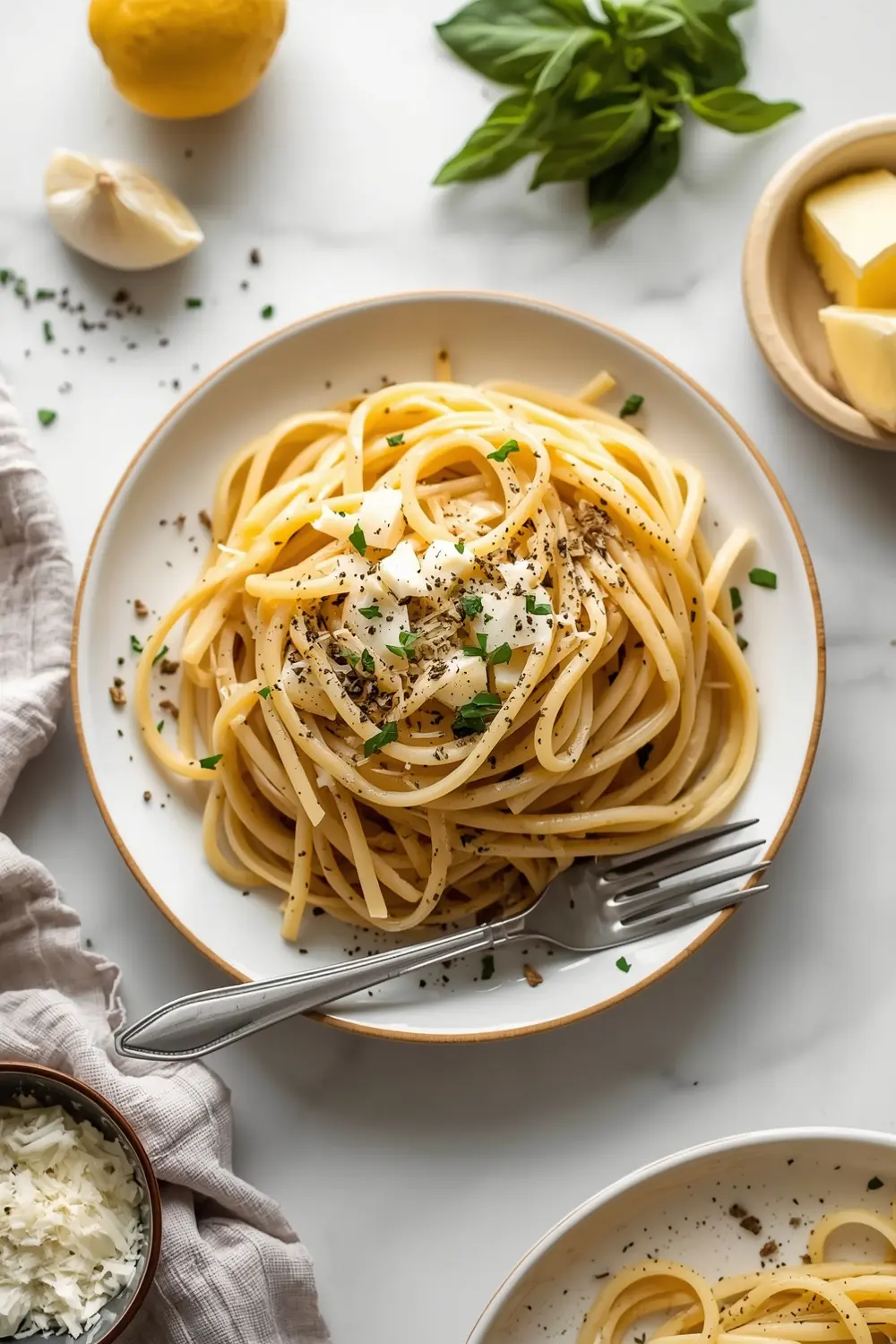
Bring a large pot of salted water to a rolling boil and add your spaghetti, stirring immediately so strands don't stick together. I always reserve a mug of pasta water here—it's the secret weapon for adjusting sauce consistency later, and most home cooks forget this step completely. Cook pasta to just under al dente, about one minute shorter than the box says, since it'll finish cooking when the sauce coats it.
While pasta water heats, combine butter and olive oil in a heavy skillet over medium heat. The oil keeps the butter from browning while staying patient—this is not a step to rush. Once the mixture stops foaming, you're ready for garlic.
Add your minced garlic cloves to the warm oil and immediately lower the heat to medium-low so the garlic softens rather than browns. This is where cozy creamy garlic pasta summer gets its mellow flavor instead of the sharp, burnt-tasting version you get at restaurants. Listen for a gentle sizzle; if it sounds angry, your heat is too high and the garlic will turn bitter.
After two minutes, when the garlic is pale and fragrant, slowly pour in heavy cream while whisking constantly. The reason you whisk is to prevent any lumps from forming and to incorporate warmth gently so the cream doesn't separate. Keep the heat at medium-low throughout this step.
Once the cream is incorporated and steaming, grate in your parmesan cheese in three additions, stirring fully between each one. Add salt, black pepper, oregano, and basil after the first batch of cheese melts. The cheese does the thickening here—you don't need flour or cornstarch, which is why this sauce coats the back of a spoon so cleanly.
Drain your pasta and add it directly to the skillet with the sauce, then toss for one minute over medium-low heat so every strand gets coated. If the sauce looks too thick, add pasta water one tablespoon at a time until you reach the consistency you want—it should flow slightly when plated, not sit in a clump.
Remove the pan from heat and stir in lemon juice and fresh parsley. I do this off-heat because the acid brightens everything while the sauce is just setting, and hot lemon can sometimes taste flat or thin. Taste here and adjust salt if needed.