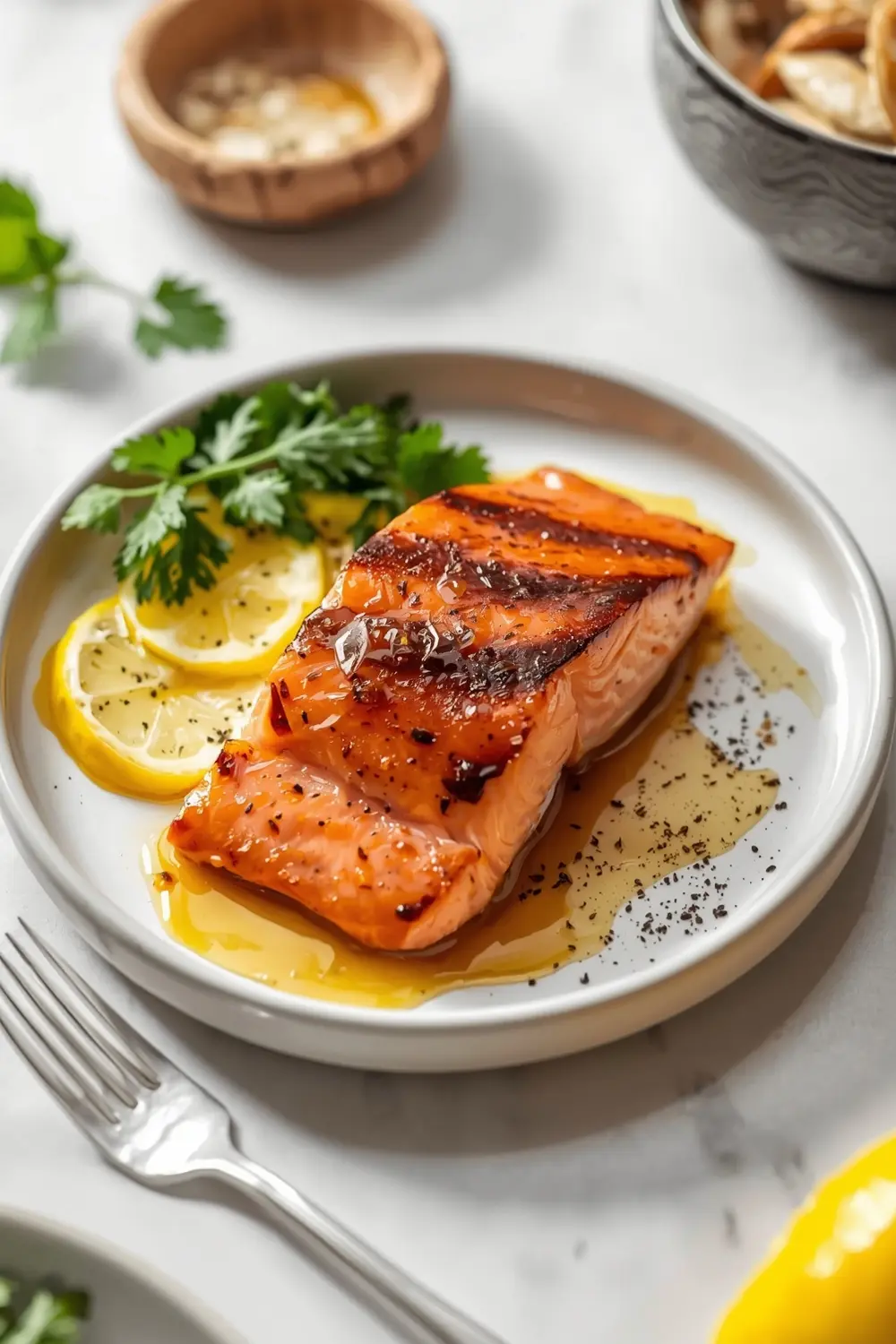
Combine the lemon juice, honey, soy sauce, olive oil, minced garlic, ginger, Dijon mustard, and dried dill in a medium bowl and whisk until the honey dissolves completely. This takes about two minutes of actual whisking. I've made the mistake of assuming the honey would dissolve on its own—it won't, and you'll end up with pockets of sweetness that won't distribute evenly into the cozy grilled salmon marinade.
Pat your salmon fillets completely dry with paper towels before placing them in a shallow dish or zip-top bag. Dry fish absorbs marinade infinitely better than wet fish does, because the moisture on the surface acts as a barrier. This small step is why your marinade actually penetrates instead of sliding right off.
Pour the cozy seafood marinade over the salmon, making sure each fillet gets coated on both sides and underneath. If using a zip-top bag, seal it and gently squeeze to distribute. Let this rest at room temperature for exactly 15 minutes—not longer, because lemon juice will start breaking down the delicate protein structure if you leave it too long.
Preheat your grill to medium-high heat (about 400°F) and lightly oil the grates with a paper towel dipped in oil. This prevents sticking and is honestly the most important step nobody talks about. I learned this the hard way after losing an entire fillet to the grates.
Place salmon skin-side up on the hot grates and cook for 12-15 minutes without moving it. The skin will crisp and the flesh underneath will gently cook through. Resist the urge to flip constantly—that's how you lose your crust and your confidence.
Check for doneness by pressing the thickest part of a fillet gently with your finger; it should flake but still feel slightly yielding inside. A meat thermometer should read 145°F at the thickest point. This is my vulnerability moment: I've overcooked salmon so many times that I now use a thermometer every single time, and the results are infinitely better.
Transfer to a serving platter and spoon any remaining warm marinade from the grill pan over the cooked fillets. Let rest for two minutes before serving. The residual heat finishes cooking the surface while the inside stays tender.