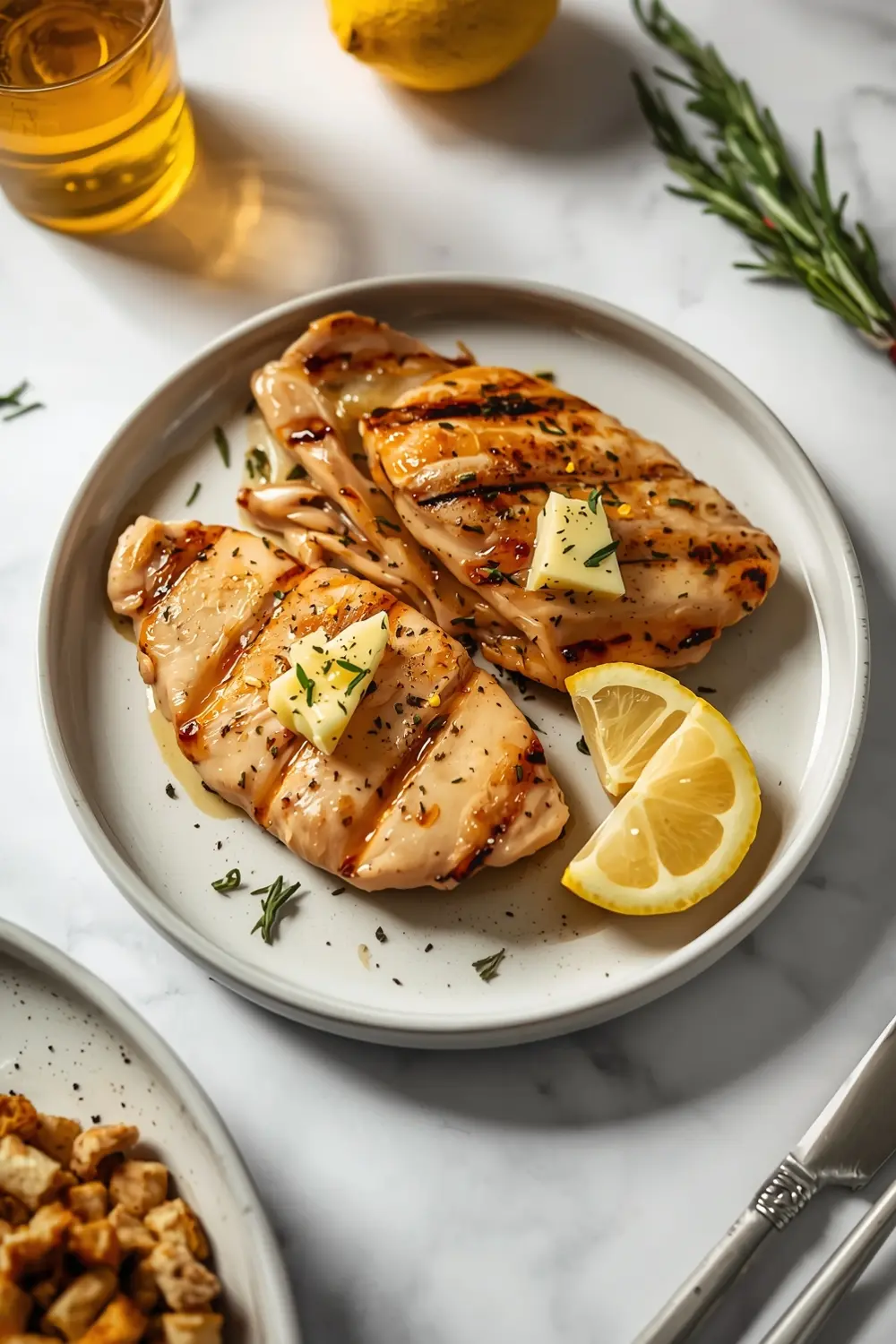
Combine the melted butter, olive oil, fresh lemon juice, and lemon zest in a small bowl—this is your base. The zest releases oils that juice alone doesn't have, giving you complex brightness instead of one-dimensional sourness. I whisk them together for 30 seconds to make sure the honey dissolves completely, because clumps of honey won't distribute evenly. This step feels small, but it changes the texture of the entire marinade from separated and thin to cohesive and clingy.
Stir in the minced garlic, dried rosemary, dried thyme, dried parsley, salt, and black pepper—work the spices with a fork for about 20 seconds to break them up slightly. The dried herbs need that crushing action to wake up their flavors. I always taste the marinade here (yes, raw chicken juice involved, but that's why I use a fresh spoon each time) to check if I want more salt or citrus. Adjust now while you can still fix it.
Pat your chicken breasts completely dry with paper towels—this matters more than it sounds. Moisture on the surface prevents browning and creates steam instead of sear marks. Place all four breasts on a cutting board and pound them gently to about three-quarter inch thickness using the flat side of a meat mallet. Uneven thickness is the reason some spots cook faster than others, causing dryness in thin areas and undercooking in thick spots. This cozy lemon herb grilled chicken recipe relies on that uniform thickness to work.
Transfer the chicken to a shallow dish and pour the entire marinade over it, making sure each breast gets fully coated on both sides. Flip once halfway through your 20-minute marinating window. Don't skip this flip—the side touching the dish won't experience the same herb distribution otherwise. I set a timer because more than 20 minutes is unnecessary and can make the chicken mushy from over-exposure to the acid.
Get your grill to medium-high heat (around 400°F), and lightly oil the grates using a brush and neutral oil. Hot grates prevent sticking and create those grill marks that make everything feel intentional. I wait about 3 minutes after the grill reaches temperature because rushing to cook before it's ready means the chicken sits on lukewarm metal and releases too much moisture.
Place each chicken breast on the grill and let it stay untouched for 4–5 minutes. This is where the magic char happens. Don't flip early or poke it—that's the biggest mistake I see happen with grilled chicken. The proteins need time to set and develop that brown exterior. You'll know it's ready when the meat releases easily from the grates without fighting back.
Flip each breast and cook the second side for 5–7 minutes until a meat thermometer reads 165°F in the thickest part. The second side always cooks slightly faster because the chicken has already absorbed heat. Use the thermometer—guessing leads to disaster. I check at the 5-minute mark just to see where we're at.
Transfer the finished chicken to a clean cutting board and let it rest for 5 minutes before serving. This resting period lets the juices redistribute throughout the meat so they don't all run out onto your plate when you cut. That rest makes the difference between juicy and dry every single time I grill.