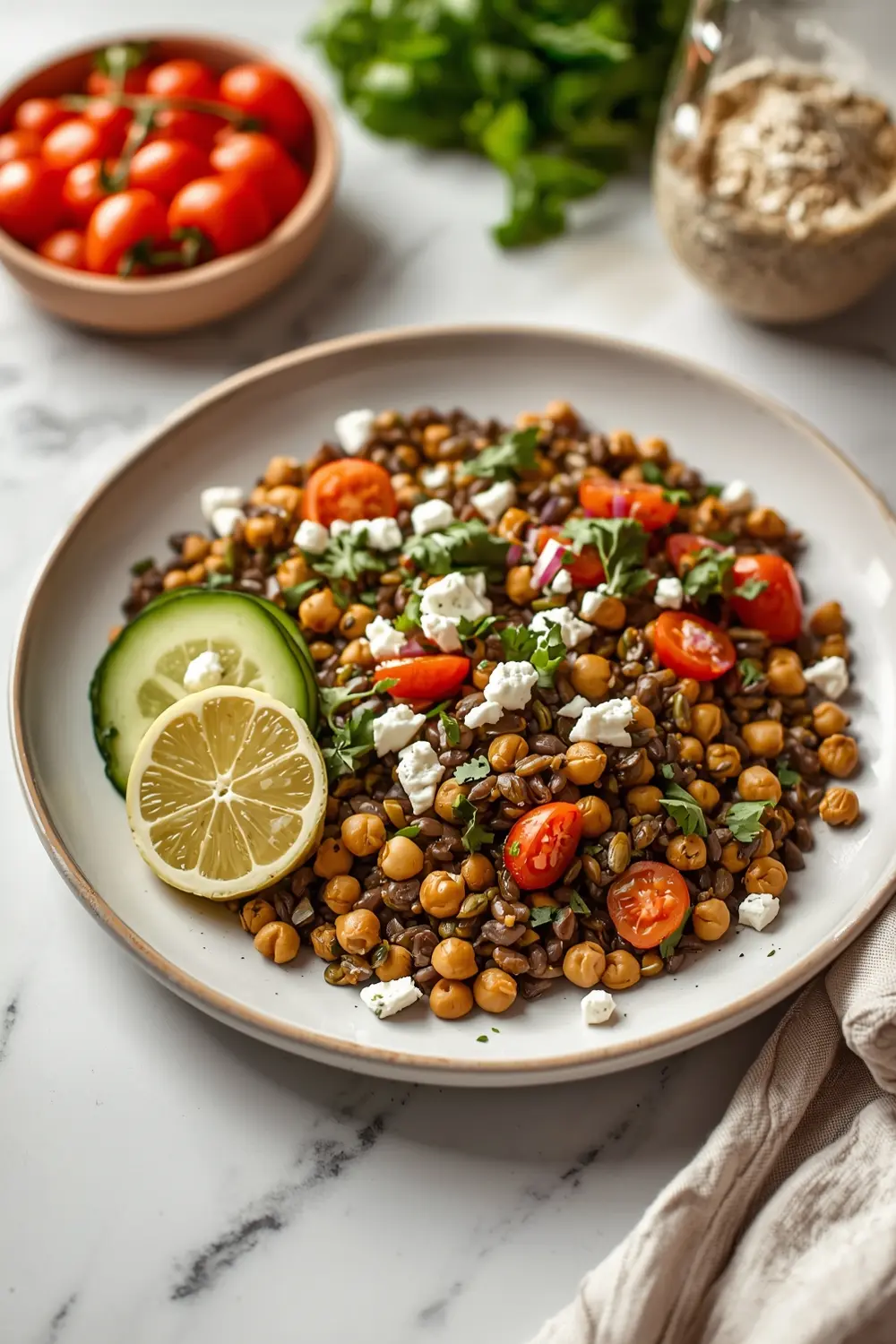
Rinse your green lentils under cold water for about 30 seconds until the water runs clear. This removes dust and prevents your finished cozy summer lentil salad recipe from tasting gritty. I learned this the hard way—my first batch felt like eating sand, so I now rinse religiously.
Bring 3 cups of water to a rolling boil in a medium pot, add the rinsed lentils, and reduce heat to medium. Simmer for 22-25 minutes until the lentils are tender enough to break between your teeth but still hold their individual shape. This is why you taste at the 20-minute mark. Over-cooked lentils won't hold your dressing; they'll just absorb it and turn to pulp.
While lentils cook, juice your lemon into a small bowl and whisk in the olive oil plus 1 tsp ground cumin. The cumin needs that fat and acid to wake up its warmth instead of sitting flat and one-dimensional. This dressing is intentionally simple because we're building a heartwarming lentil salad, not competing with it.
When lentils reach tender but still firm, drain them in a colander but don't rinse them. Here's why: the starch on their surface is actually helping them absorb your dressing. I used to rinse finished lentils because I thought it was "cleaner"—it just made them bounce away from the seasoning instead of hugging it.
Pour the warm lentils directly into the dressing while they're still steaming. This is the critical moment. Stir constantly for about 60 seconds so every lentil gets coated and the flavors can actually penetrate the surface. Cold lentils won't absorb anything no matter how hard you try.
Let the cozy healthy side sit at room temperature for 10 minutes so the flavors meld without the salad getting mushy. This is when you prep your vegetables—slice the red onion, dice your cucumber, halve the cherry tomatoes, chop your parsley. Prep timing matters more than people realize because you want to add fresh elements to warm (not hot, not cold) lentils.
Fold in the cucumber, cherry tomatoes, red onion, parsley, chickpeas, and feta cheese just before serving. The pumpkin seeds go on top last so they stay crisp against the warm base instead of softening into the dressing. This layering technique means your salad stays interesting from bite one through bite last.