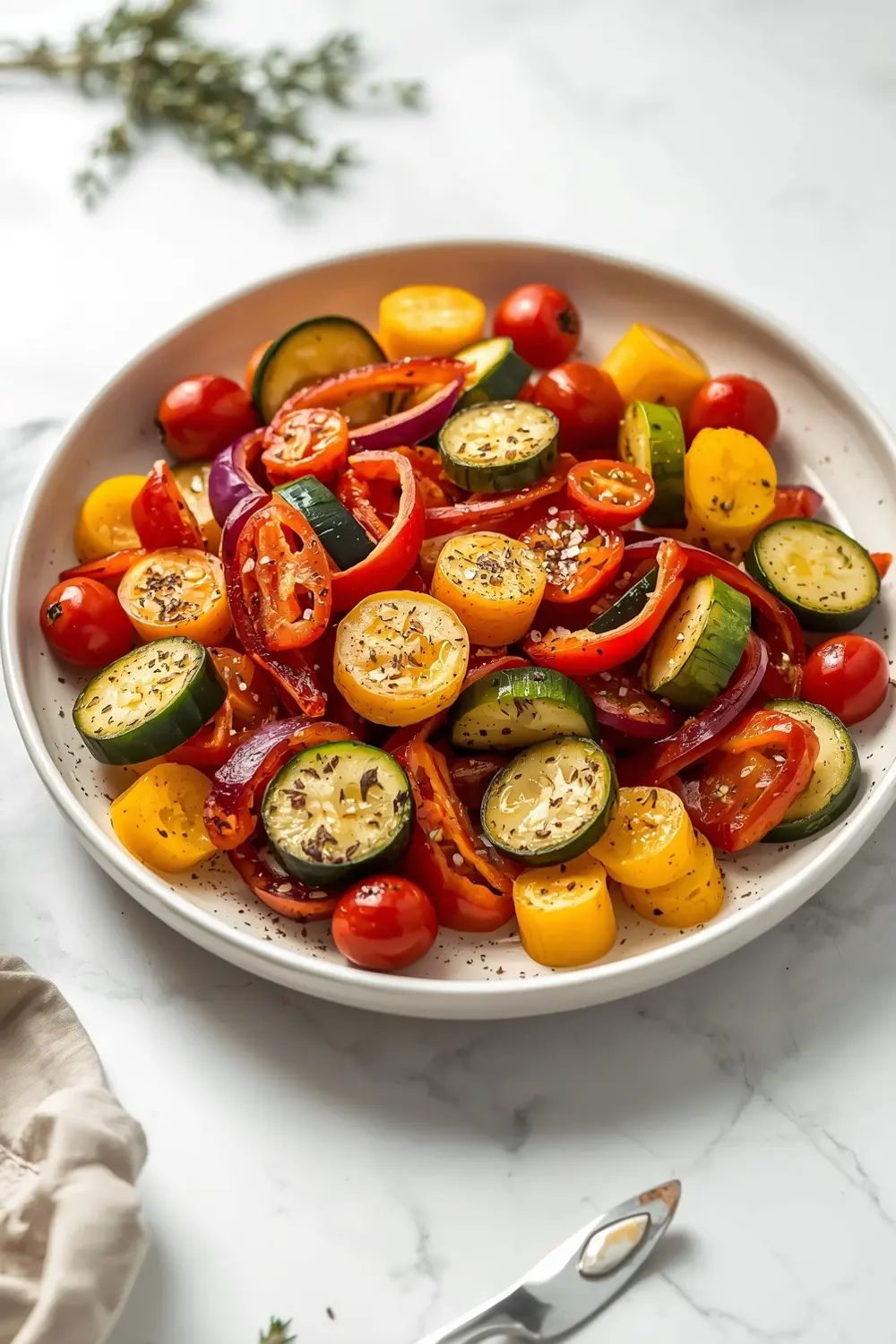
Preheat your oven to 425°F and line a large sheet pan with parchment paper for easier cleanup later. I'm confessing that I skip this step sometimes and regret it every single time when burned bits stick to the pan. This matters because cleanup should never overshadow the joy of a good meal, and parchment saves you at least ten minutes of scrubbing.
Toss all vegetables into a large bowl—carrots, zucchini, both bell peppers, red onion, and cherry tomatoes—then drizzle with olive oil and minced garlic. The reason you combine everything in a bowl first is that oil distributes evenly this way, ensuring every piece gets that golden, caramelized exterior. I learned this by roasting vegetables without mixing them first, and the results were wildly inconsistent across the pan.
Sprinkle dried thyme, smoked paprika, sea salt, and black pepper over the mixture, then toss everything together with your hands until each vegetable feels lightly coated. You'll know you're done when no dry herbs sit at the bottom of the bowl and the oil looks slightly herb-tinged. This step determines whether your cozy summer roasted vegetables recipe tastes intentionally seasoned or underseasoned, so don't rush it—spend the extra 30 seconds mixing thoroughly.
Spread the vegetables across your prepared sheet pan in a single layer, trying to avoid stacking pieces too closely together. Vegetables need space for air circulation; crowding them creates steaming instead of roasting. When pieces sit packed together, they release moisture and turn soft rather than developing that slightly caramelized exterior that makes warm summer sides actually appetizing.
Roast for 25-30 minutes, stirring halfway through (around the 12-15 minute mark) to ensure even browning on all sides. At the halfway point, you should see the edges of carrots turning golden and red onions beginning to collapse slightly. The vegetables are done when you can pierce a carrot slice with a fork and the edges look slightly darker than the centers.
Remove from the oven and let the pan rest for exactly 2 minutes before drizzling with fresh lemon juice across the entire surface. This timing matters because the residual heat helps the lemon juice meld into the vegetables without the dish cooling down completely. Lemon juice added during cooking gets bitter and muted; added at the end, it stays bright and alive, transforming heartwarming roasted veggies from comforting into genuinely crave-able.