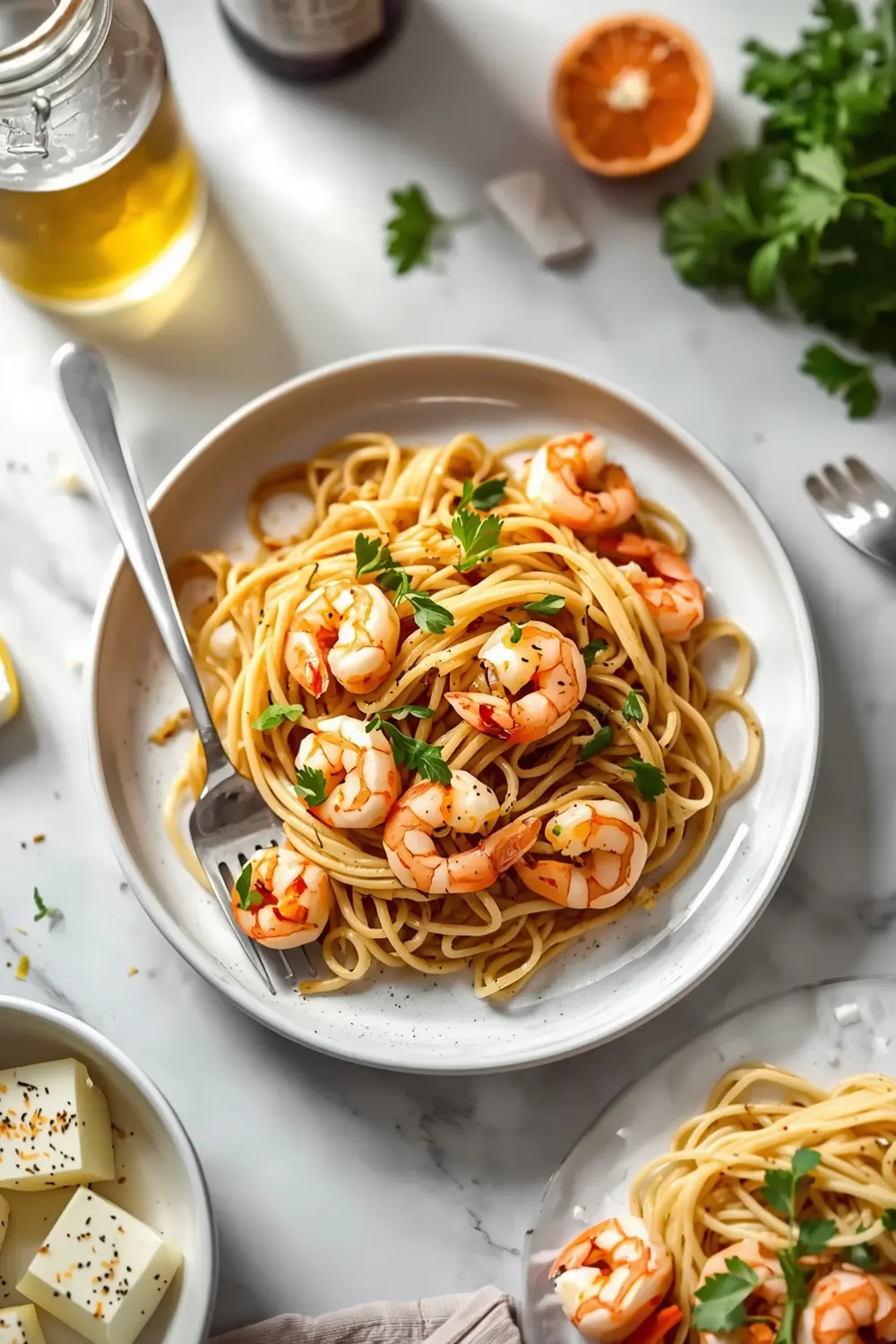
Bring salted water to a rolling boil in a large pot—listen for that aggressive, bubbling sound before you add pasta. Salt the water until it tastes like the sea, which feels excessive but seasons the cozy summer shrimp pasta recipe from inside out. I used to skip this step and wondered why my pasta tasted flat, so trust this one.
Drop spaghetti into boiling water and set a timer for two minutes under the package time—aim for pasta that bends slightly when you lift a strand but still holds its shape. This is personal confession time: I've overcooked pasta a thousand times because I forgot it was going into a hot pan afterward. Reserve one cup of pasta water before draining, then set the drained pasta aside.
While pasta cooks, heat olive oil in a large skillet over medium-high heat until it shimmers and moves like water across the pan. Add minced garlic and diced onion, stirring constantly for exactly 90 seconds—you want fragrance, not color. This matters because burned garlic turns bitter and ruins the whole dish, so don't walk away.
Add red pepper flakes and lemon zest to the oil, stirring for 15 seconds until the kitchen smells like someone's heading to Italy. Push the garlic mixture to the sides of the skillet, then add large shrimp in a single layer. Let shrimp sit untouched for exactly three minutes, which allows the underside to turn opaque without the flip-flopping that toughens them.
Flip each shrimp and cook for one more minute on the second side—they should curl into a C-shape, not a complete O. Squeeze fresh lemon juice into the pan and add butter, stirring until the butter coats everything. Add the drained pasta directly to the shrimp, along with half the reserved pasta water, salt, and black pepper.
Toss everything together over heat for 60 seconds, letting the starchy pasta water emulsify with the butter and oil—you're building a natural sauce here, not dumping cream. If it looks dry, add more pasta water one tablespoon at a time. Add grated parmesan and fresh parsley, tossing one final time until the cheese melts into the warm strands.