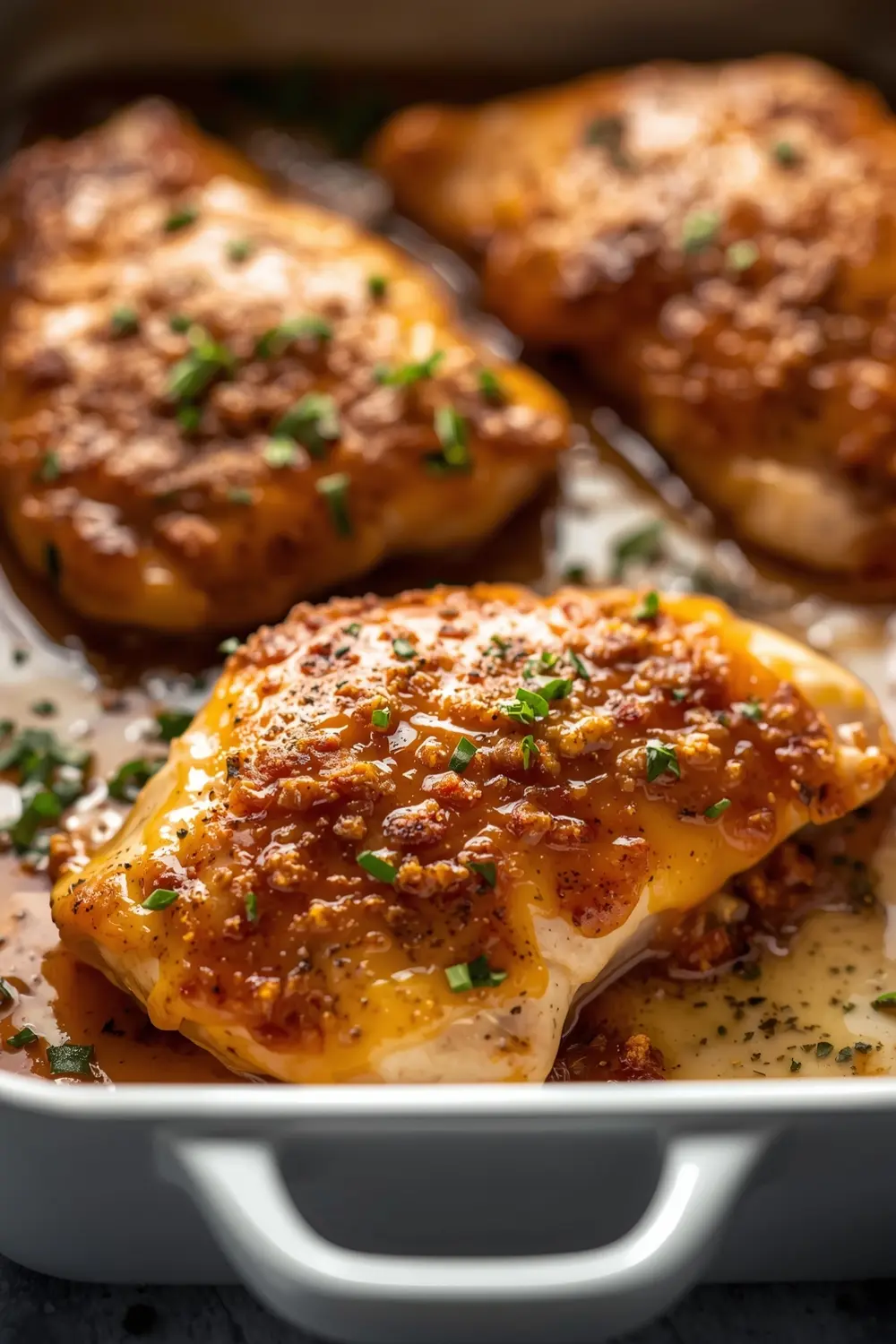
Preheat your oven to 375°F and line a baking sheet with parchment paper. Pat the chicken thighs completely dry with paper towels—this is non-negotiable if you want the panko to stick properly. Moisture is the enemy of a crispy coating, so don't skip this step even though it seems tedious.
Mix the panko, garlic powder, paprika, salt, and black pepper in a shallow bowl. In another bowl, whisk together the honey, Dijon mustard, and olive oil until smooth. You want the glaze to be thin enough to brush but thick enough to coat. The consistency should be like thin peanut butter.
Brush each chicken thigh with the honey mustard mixture on both sides, then press into the panko coating. You'll hear it crackle a bit as the panko adheres—that's exactly what you want. Make sure every surface gets coated. Work quickly so the honey doesn't get sticky and hard to work with.
Arrange the coated thighs on your prepared baking sheet in a single layer, skin-side up. Drizzle the remaining glaze over the top of each piece. Don't go overboard—a light coating is better than drowning them. You've got more glaze action happening in step six, so stay patient.
Bake uncovered for 20 minutes at 375°F. At this point, the panko should look dry and slightly golden, but the glaze won't be fully set yet. This is my first-person observation from making this dozens of times—the chicken won't look done, but that's exactly right.
Brush the remaining honey mustard glaze over the chicken and scatter the melted butter across the top. Return to the oven for 15 more minutes. When your kitchen smells like warm caramelized honey and toasted mustard, you're about three minutes from perfect. The edges should be golden and slightly crispy.
Remove from the oven and let rest for 5 minutes before serving. This resting period lets the juices redistribute so every bite stays moist. I always forget this step when I'm hungry, and it makes a noticeable difference—the chicken stays juicier when you wait those five minutes.