Toast your pine nuts in a dry skillet over medium heat for 3-4 minutes, shaking the pan every 30 seconds until golden and fragrant. I learned this the hard way after burning them twice—watch the color change, not the clock. Once they smell nutty and start to deepen, transfer them immediately to a plate because they'll keep cooking on residual heat.
Pat the chicken breast dry with paper towels and season generously with salt and black pepper on both sides. This small step prevents steaming and helps the surface brown instead of just turning pale. Heat 2 tablespoons of olive oil in your skillet over medium-high, then lay the chicken flat for 6-7 minutes without moving it.
Flip the chicken and cook for another 5-6 minutes until a meat thermometer reads 165°F at the thickest point. I used to cut into the middle to check, which always dried it out more than necessary. Let it rest on a cutting board for 5 minutes before slicing—this step redistributes the juices throughout the meat instead of letting them pool on your plate.
While chicken rests, bring a large pot of salted water to a rolling boil and add spaghetti. Cook according to package directions until al dente—usually around 9-10 minutes. Reserve 1 cup of pasta water before draining because you'll use this starch to help the sauce cling to noodles.
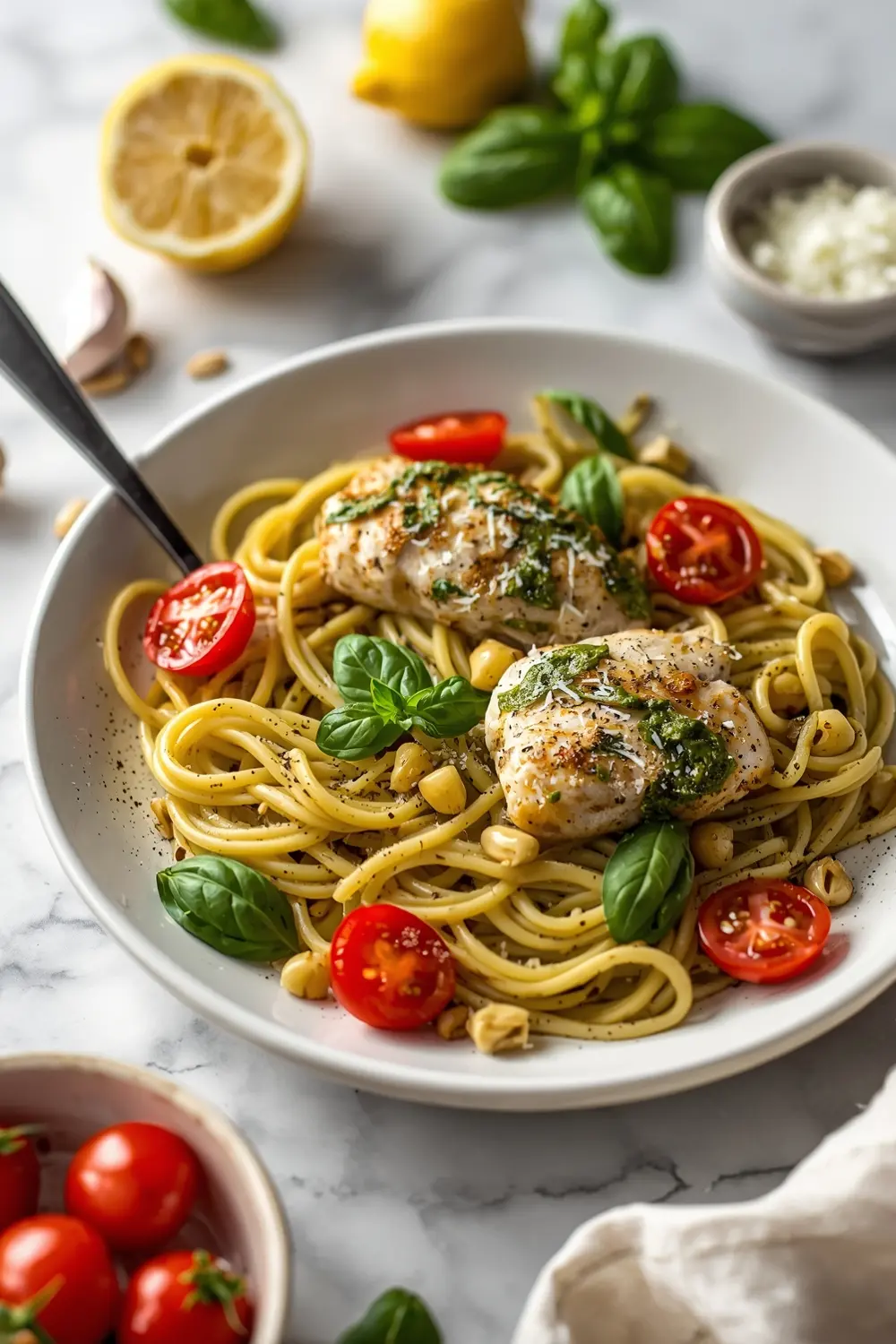
Pulse fresh basil, toasted pine nuts, garlic cloves, and remaining olive oil in a food processor until the mixture looks chunky but cohesive. This pesto chicken pasta cozy needs texture—if you over-blend, you'll get baby food instead of sauce with character. Transfer to a large bowl and stir in grated Parmesan, lemon zest, and lemon juice.
Slice your rested chicken into bite-sized pieces and toss with the hot pasta in your pesto mixture. Add pasta water one quarter-cup at a time until the sauce feels loose enough to coat every noodle without pooling at the bottom. The starch in that water is what transforms pesto from a thick paste into an actual sauce.
Fold in your halved cherry tomatoes gently so they stay intact and their juices bleed slightly into the warm basil comfort dish. Taste and adjust salt, pepper, or lemon juice according to your preference—trust your palate, not the recipe.